
 DE
DE  EN
EN  ZH
ZH  JA
JA 
Der Blog
Ultimativer Leitfaden: Tipps zur Auswahl eines Lieferanten für Titananoden

Wie Sie den richtigen Lieferanten für Titananoden für Ihre industriellen Anforderungen auswählen und beziehen
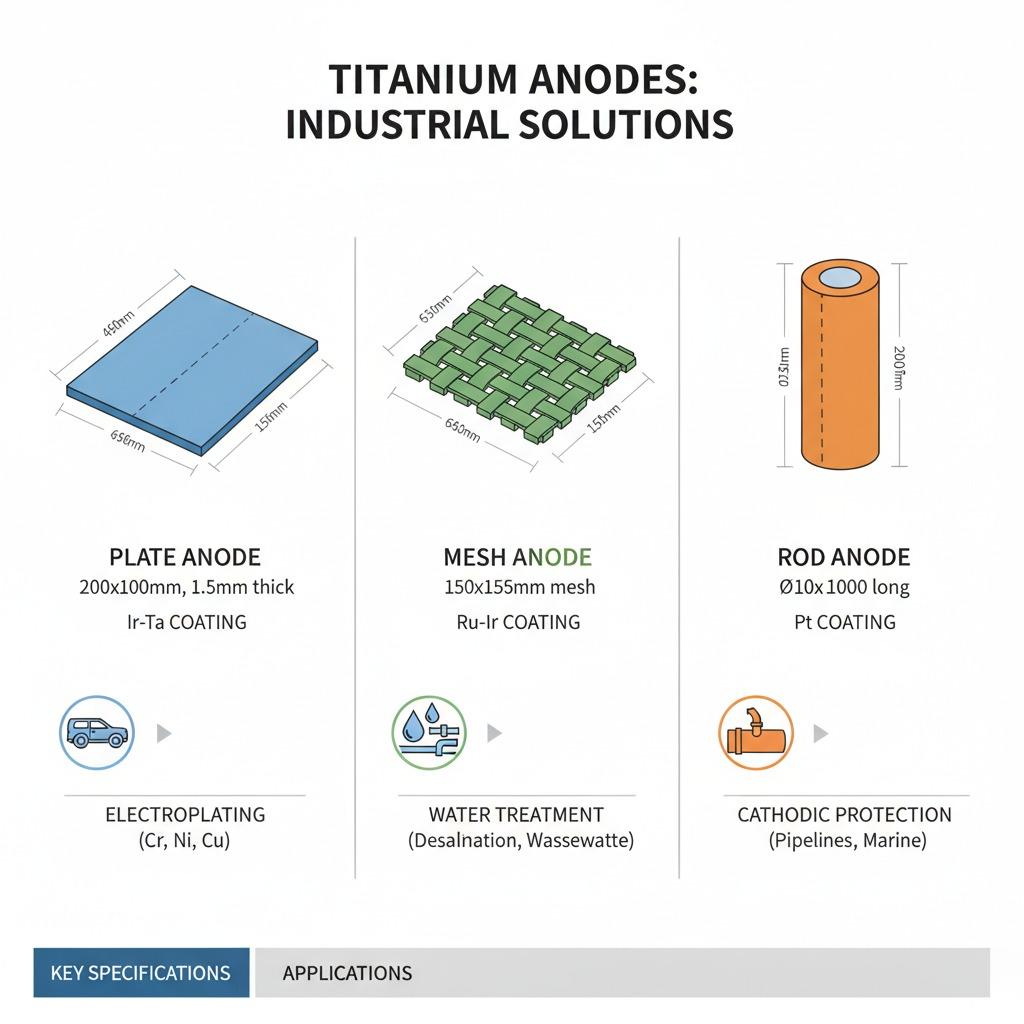
In der Welt der industriellen Anwendungen ist die Wahl eines zuverlässigen Lieferanten von Titananoden entscheidend für die Qualität und Effizienz Ihrer elektrochemischen Prozesse. Ob Galvanisierung, Wasseraufbereitung oder kathodischer Korrosionsschutz – die Auswahl des richtigen Lieferanten kann den entscheidenden Unterschied in Leistung und Lebensdauer ausmachen. Dieser Leitfaden führt Sie durch die wichtigsten Schritte zur Identifizierung und Partnerschaft mit einem erstklassigen Lieferanten von Titananoden. So vermeiden Sie häufige Fehler und optimieren Ihre Lieferkette.
Grundlagen von Titananoden verstehen
Bevor Sie sich mit der Auswahl eines Lieferanten befassen, ist es wichtig zu verstehen, was Titananoden so überlegen macht. Titananoden sind mit Mischmetalloxiden (MMO) oder Platin beschichtet, um die Leitfähigkeit und Korrosionsbeständigkeit zu verbessern und sie so ideal für anspruchsvolle Umgebungen zu machen. Als Lieferant von Titananoden sollten Sie sich auf präzisionsgefertigte Komponenten konzentrieren, die konstant gute Ergebnisse liefern. Beginnen Sie mit der Bewertung Ihrer spezifischen Anforderungen, wie Größe, Form (z. B. Platte, Gewebe oder Stab) und Beschichtungstyp. Beispielsweise benötigen Sie in der Chloralkali-Produktion Anoden mit hohem Sauerstoffentwicklungspotenzial, um Energieverluste zu minimieren. Prüfen Sie die Qualität des Anodensubstrats – Titan der Güteklasse 1 oder 2 ist Standard für Langlebigkeit. Ein guter Lieferant von Titananoden liefert detaillierte Spezifikationen, einschließlich Stromdichtewerten und Lebensdauerprognosen, die unter optimalen Bedingungen oft 5.000 Stunden übersteigen.
Wichtige Kriterien zur Bewertung eines Lieferanten von Titananoden
Sobald Sie Ihre Anforderungen kennen, bewerten Sie potenzielle Lieferanten anhand mehrerer Schlüsselfaktoren. Prüfen Sie zunächst deren Fertigungskapazitäten. Suchen Sie nach einem Titananodenlieferanten mit ISO-zertifizierten Anlagen, der fortschrittliche Techniken wie die thermische Zersetzung für Beschichtungen einsetzt, um eine gleichmäßige Haftung und Leistung zu gewährleisten. Vergewissern Sie sich, dass der Lieferant Erfahrung in Ihrer Branche hat; beispielsweise sollten Lieferanten, die sich auf Umweltanwendungen spezialisiert haben, Ruthenium-basierte Beschichtungen für die effiziente Sauerstofferzeugung in Wasseraufbereitungsanlagen hervorheben. Überprüfen Sie anschließend die Maßnahmen zur Qualitätskontrolle – seriöse Lieferanten führen strenge Tests hinsichtlich Haftung, beschleunigter Lebensdauer und elektrochemischer Leistung durch. Fragen Sie nach Zertifizierungen wie ASTM B265 für die Titanreinheit. Berücksichtigen Sie außerdem die Zuverlässigkeit der Lieferkette: Bietet der Lieferant kundenspezifische Anpassungen, kurze Lieferzeiten und weltweiten Versand an? Fallstudien oder die Anforderung von Mustern können Aufschluss über sein Engagement für Exzellenz geben. Priorisieren Sie schließlich Lieferanten mit einem starken Kundendienst, einschließlich technischer Beratung zur Behebung von Problemen wie Passivierung oder Überspannung in Ihren Anlagen.
Schritte zur Findung Ihres idealen Titananodenlieferanten
Die Suche nach dem idealen Lieferanten für Titananoden erfordert ein strukturiertes Vorgehen. Beginnen Sie mit Online-Recherchen in Verzeichnissen wie ThomasNet oder Alibaba und filtern Sie nach verifizierten Herstellern mit positiven Bewertungen. Kontaktieren Sie mindestens drei potenzielle Lieferanten und fordern Sie Angebote mit detaillierten Datenblättern an. Erkundigen Sie sich in den Gesprächen nach deren Forschungs- und Entwicklungsaktivitäten – innovative Lieferanten bieten möglicherweise dimensionsstabile Anoden (DSA) mit Iridiumbeschichtung für eine verbesserte Chlorentwicklung bei der Sole-Elektrolyse an. Verhandeln Sie Konditionen für Großbestellungen, um Rabatte zu sichern, und stellen Sie sicher, dass die Lieferanten Umweltstandards einhalten, um Ihre Nachhaltigkeitsziele zu unterstützen. Testen Sie eine kleine Charge in Ihrem Betrieb, um Leistungskennzahlen wie die Spannungseffizienz zu validieren. Bauen Sie langfristig eine Geschäftsbeziehung durch regelmäßige Audits und Feedbackschleifen auf, um sich an veränderte Bedürfnisse anzupassen, beispielsweise bei der Skalierung für größere Projekte im Bergbau oder in der Luft- und Raumfahrt. Mit diesen Schritten finden Sie einen Lieferanten für Titananoden, der Ihre Erwartungen nicht nur erfüllt, sondern übertrifft und so Kosteneinsparungen und Betriebssicherheit ermöglicht.
Häufige Fehler, die Sie bei der Auswahl eines Lieferanten von Titananoden vermeiden sollten
Selbst bei sorgfältiger Planung können Fallstricke auftreten. Meiden Sie Anbieter mit unrealistisch niedrigen Preisen, da diese möglicherweise Abstriche bei der Beschichtungsdicke machen, was zu vorzeitigem Ausfall führen kann. Achten Sie unbedingt auf Kompatibilität – stellen Sie sicher, dass das Anodendesign zu Ihrer Zellkonfiguration passt, um Kurzschlüsse zu vermeiden. Ignorieren Sie generische Anbieter und wählen Sie stattdessen solche mit nachweislicher Erfahrung in der Entwicklung kundenspezifischer Titananodenlösungen. Beobachten Sie regelmäßig Markttrends, wie beispielsweise den Trend zu bleifreien Alternativen, um stets einen Schritt voraus zu sein. Indem Sie diese Fehler vermeiden, erhalten Sie durch die Zusammenarbeit mit einem Titananodenlieferanten langlebige, leistungsstarke Komponenten, die optimal auf Ihre Anwendungen zugeschnitten sind.