ブログ
水素製造用チタン陽極:購入ガイド
Why buyers keep asking about a titanium anode for hydrogen production
If you are sourcing equipment for electrolysis, a titanium anode for hydrogen production is usually not a generic line item. It sits inside a system where efficiency, durability, and contamination control all matter at once. That is why engineers and procurement teams tend to compare anode materials more carefully than they would for ordinary fluid-handling parts. A small change in the electrode surface can affect gas output, power consumption, maintenance intervals, and ultimately the economics of the hydrogen line.
There is also a practical reason for the attention. Hydrogen production setups are often run hard, with conductive electrolytes, repeated cycling, and a strong need for stable electrochemical performance. Titanium shows up frequently because it offers a useful balance of strength, corrosion resistance, and manufacturability. But titanium alone is not the full story. In many applications, what matters is the coating, the geometry, and how the anode is integrated into the cell or stack. Buyers who treat all titanium electrodes as interchangeable usually end up disappointed.

What a titanium anode actually does in the process
In hydrogen production by electrolysis, the anode is the side where the oxidation reaction occurs. That sounds simple on paper, but in a real industrial cell the anode must keep performing while exposed to an aggressive chemical and electrical environment. If the surface degrades, the system can lose efficiency, generate unwanted byproducts, or require more frequent shutdowns.
Titanium is often selected as the base material because it provides a stable substrate and can be formed into meshes, plates, expanded structures, or other electrode forms. In many industrial designs, the working surface is enhanced with a catalytic coating suited to the electrolyte and process conditions. From a buyer’s perspective, the key decision is not just “titanium or not,” but whether the anode construction matches the cell chemistry, current density, and service expectations.
Quick comparison points buyers should look at
When teams compare electrode options, the same few questions usually decide the shortlist.
Base material
Titanium is popular because it is lightweight, strong, and resistant to corrosion in many environments. That does not mean every titanium part will survive every electrolyte. Compatibility still has to be checked against the actual process.
Surface system
The active surface is often more important than the substrate. Buyers should ask what coating system is used, how it is applied, and whether it suits the operating chemistry. A well-made substrate with the wrong coating can be a poor choice.
Mechanical form
Plate, mesh, expanded metal, and custom shapes each bring tradeoffs. Mesh designs can increase exposed area and support mass transfer, while plates may be preferred for certain cell layouts or cleaning routines. The right answer depends on the stack design, not on marketing language.
Installation details
Connection points, mounting method, and electrical contact quality can matter more than many buyers expect. A good anode that is awkward to fit into the system can create avoidable losses.
Where the visible product style matters, even if it is not the anode itself
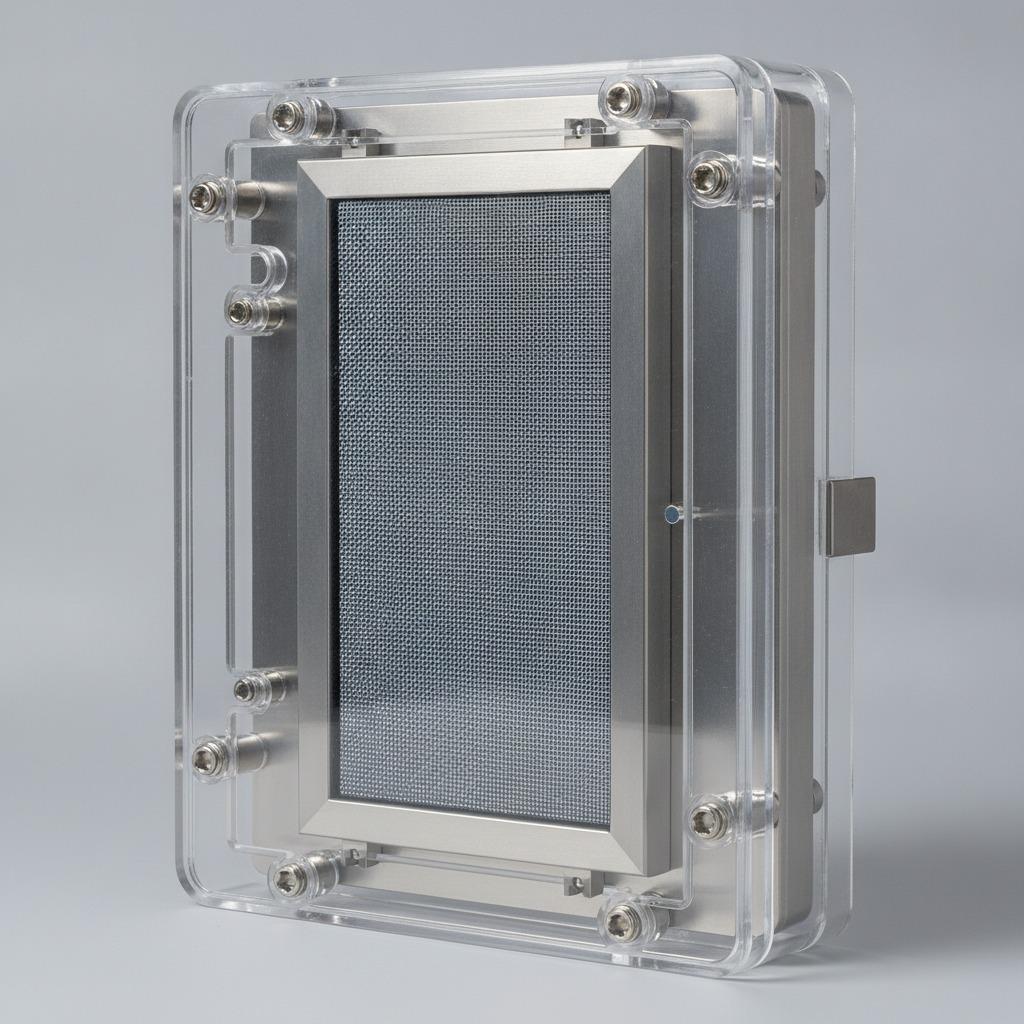
The supplied product image shows a compact inline industrial component with a transparent cylindrical chamber, black end caps or flanges, metal fasteners, and a side port. The exact product identity is not clear from the image alone, so it would be a mistake to label it too confidently. Still, the design offers a useful reminder for hydrogen system buyers: visibility and serviceability often matter just as much as raw performance.
In water treatment, chemical processing, and lab or industrial fluid systems, transparent chambers can help operators inspect flow, spot deposits, or check whether a component is functioning as intended. That same logic applies to hydrogen production equipment as well. If the anode assembly or associated fluid path is easy to inspect, maintenance teams can catch problems earlier. In practice, that may reduce downtime, though the exact benefit depends on the overall system design.
Selection criteria that are easy to overlook
One common mistake is buying an anode based only on the base metal. For hydrogen production, the technical review should also include operating temperature, electrolyte type, current distribution, and whether the anode is meant for continuous or intermittent service. Some buyers also forget to ask about cleaning and replacement access. That can turn a seemingly straightforward purchase into a maintenance headache later.
Another point worth checking is how the anode behaves under real plant conditions, not just nominal lab conditions. Stable operation depends on the whole assembly: spacer design, sealing, electrical contact, and fluid movement around the electrode. If the system uses an inline chamber or inspection window elsewhere in the loop, that can help operators observe behavior during startup and troubleshooting. Small design choices often save time in the field.
Questions to ask suppliers before you place an order
Before buying a titanium anode for hydrogen production, ask the supplier to describe the exact cell environment it is meant for. Request clarity on electrolyte compatibility, expected duty cycle, and installation method. If the anode is coated, ask what the coating is intended to do and whether it is suitable for your operating window. If the supplier cannot explain those basics clearly, that is usually a warning sign.
You should also ask whether the design can be integrated into your existing cell geometry without forcing a redesign of surrounding parts. In manufacturing, the lowest-cost electrode is rarely the cheapest option once installation and replacement labor are counted.
購入者の持ち帰り
The safest way to source a titanium anode for hydrogen production is to treat it as a system component, not a commodity. Match the base material, coating, geometry, and connection style to the actual process, then confirm the practical details that affect maintenance and uptime. If you are still comparing options, start with the electrolyte chemistry and the cell architecture. Those two factors narrow the field faster than almost anything else.
If you need to evaluate a specific titanium anode design or a related inline fluid component for your hydrogen line, the next step is to build a short technical checklist and compare supplier drawings against your operating conditions before asking for samples or a pilot run.