
 DE
DE  EN
EN  ZH
ZH  JA
JA 
Der Blog
Abmessungen von Titananoden: So ermitteln Sie die richtige Größe vor der Bestellung
Abmessungen von Titananoden: So ermitteln Sie die richtige Größe vor der Bestellung
Wenn Käufer suchen nach Abmessungen der TitananodeSie versuchen in der Regel, einen sehr teuren Fehler zu vermeiden: die Bestellung einer Anode, die zwar auf dem Papier in den Tank oder die Leitung passt, aber bei der Montage, der Stromdichtemessung oder einfach bei der Handhabung versagt. In elektrochemischen Anlagen sind die Abmessungen kein rein kosmetisches Detail. Sie beeinflussen die Leitfähigkeit, die Abstände, die Wartungszugänglichkeit und die Lebensdauer der gesamten Anlage.
Dies gilt insbesondere dann, wenn die Anode Teil einer längeren industriellen Baugruppe mit wiederkehrenden Merkmalen und endseitig montierten Bolzen ist, wie beispielsweise längliche Streifenbauteile, die häufig in Gerätevorrichtungen oder elektrisch verbundenen Prozesskomponenten verwendet werden. Ist das Bauteil zu kurz, zu dick oder an der falschen Stelle gebohrt, passt das System zwar im Prinzip noch, aber nicht so, wie es ein Ingenieur benötigt.
Warum Abmessungen wichtiger sind als Käufer erwarten
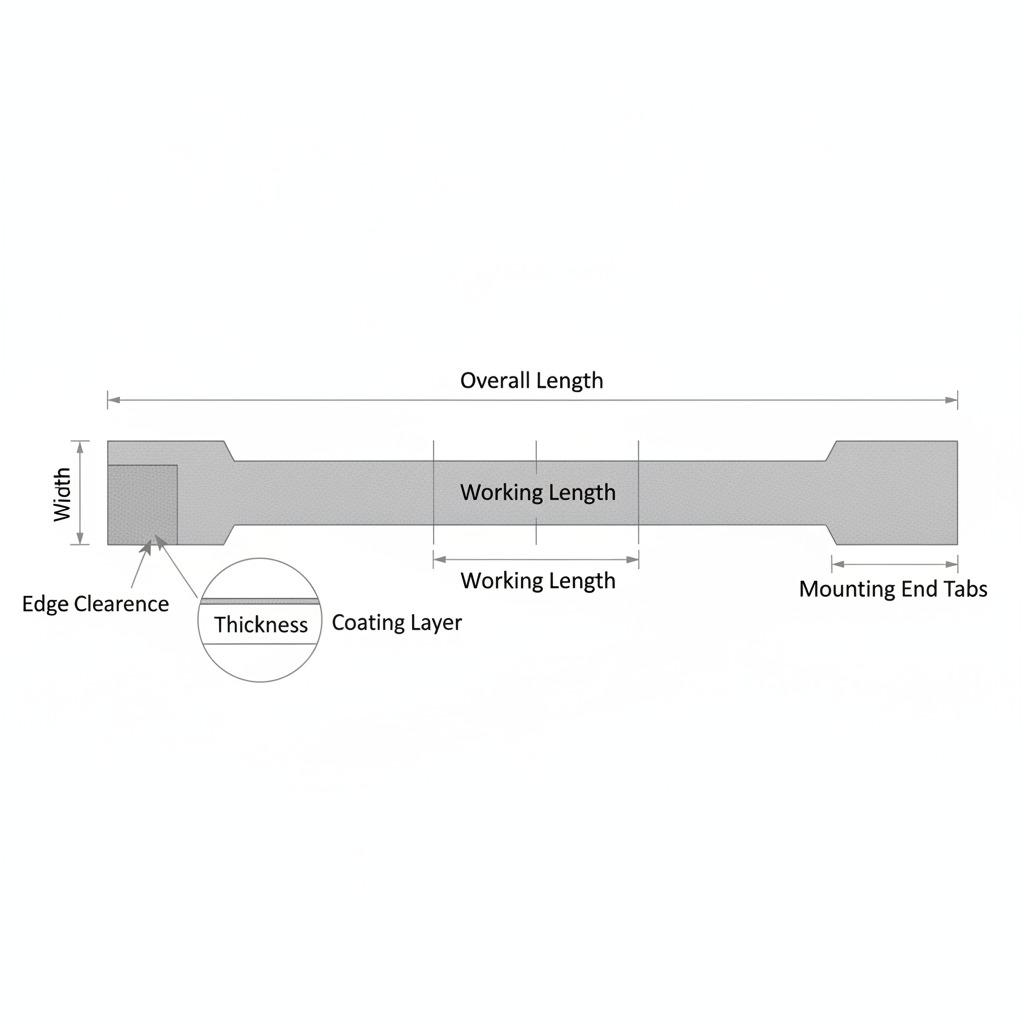
Eine Titananode wird selten allein nach ihrer Länge ausgewählt. Ingenieure müssen in der Regel alle relevanten Faktoren berücksichtigen: Gesamtlänge, Breite, Dicke, Positionen von Bohrungen oder Bolzen, Randabstände und die tatsächlich am Prozess beteiligte aktive Fläche. Schon wenige Millimeter können die Ausrichtung, die Strömung um das Bauteil und die Wartungsfreundlichkeit beeinflussen.
Für Beschaffungsteams ist das praktische Problem einfach: Ein Lieferant mag ein Teil als „kundenspezifisch“ oder „nach Zeichnung gefertigt“ bezeichnen, doch die Zeichnung muss einige unabdingbare Vorgaben enthalten. Andernfalls drohen Nacharbeiten, Adapterplatten oder eine Baugruppe, die umständlich zu montieren und noch schwieriger auszutauschen ist.
Wichtige Dimensionspunkte, die zuerst festgelegt werden sollten
1. Gesamtlänge und Arbeitslänge
Beginnen Sie mit der Gesamtlänge der Anode und definieren Sie anschließend die nutzbare Länge separat. In vielen industriellen Baugruppen ist der nutzbare Abschnitt kürzer als die Gesamtlänge, da durch Endbefestigungen, Montagezugaben oder Randabsperrungen Länge verloren geht.
2. Breite und Dicke
Diese beiden Dimensionen beeinflussen Steifigkeit, Gewicht und das Verhalten des Bauteils unter Last oder Temperaturwechselbeanspruchung. Ein dünner Streifen lässt sich zwar leichter in eine schmale Baugruppe integrieren, ist aber im Betrieb weniger robust. Dieser Kompromiss ist insbesondere bei langen, schmalen Bauteilen mit wiederholten Kontaktpunkten oder Befestigungselementen relevant.
3. Lochmuster oder Bolzenabstand
Hier kann leicht ein teurer Fehler passieren. Wenn die Anode mit Gewindebolzen befestigt wird, müssen Abstand, Überstand, Gewindegröße und Ausrichtung genau angegeben werden. Gehen Sie nicht davon aus, dass ein „ähnliches“ Muster ohne Weiteres passt.
4. Randabstand und Freiraum
Viele Käufer übersehen den Abstand zwischen der Kante des Bauteils und dem Befestigungspunkt. Ist dieser Abstand zu gering, entstehen mechanische Spannungen an den Enden. Ist er zu groß, kann die Baugruppe nicht mit benachbarten Teilen fluchten.
Material und Geometrie: Was Sie mit dem Lieferanten klären sollten
Titan wird aus gutem Grund gewählt, doch der Name allein genügt nicht. Die Güteklasse, die Oberflächenbeschaffenheit und jegliche Beschichtungs- oder Verbindungsmethoden können die Leistung beeinflussen. Bei einem Prozessbauteil mit sichtbaren, sich wiederholenden Merkmalen kann die Geometrie genauso wichtig sein wie das Grundmaterial.
Für den Käufer ist nicht die Frage „Ist es aus Titan?“ entscheidend, sondern „Welche Teile sind aus Titan, welche Teile sind eingesetzt oder verklebt und welche Abmessungen sind für die Funktion kritisch?“ Das ist wichtig, wenn die Baugruppe gemischte Materialien, plattierte Bolzen, Verbindungsblöcke oder lokale Befestigungselemente enthält.
Wenn das Bauteil Teil eines elektrochemischen oder thermischen Prozesses ist, sollten Sie auch nachfragen, ob der Lieferant die Abmessungen unter Umgebungsbedingungen, nach der Beschichtung oder nach der Endmontage angibt. Das mag zunächst unbedeutend erscheinen, doch eine dicke Beschichtung oder eine Verbundschicht verändert den Schichtaufbau.
Häufige Fehler bei der Angabe der Abmessungen von Titananoden
Ein häufiger Fehler ist das Übertragen der Größe eines vorhandenen Bauteils, ohne die tatsächlichen Einbaumaße zu prüfen. Alte Bauteile wurden möglicherweise bereits einmal angepasst. Ein weiterer Fehler ist die Vernachlässigung des Bolzenmusters. In der Praxis ist die Endverbindung oft ausschlaggebend für die gesamte Konstruktion.
Ein dritter Fehler ist das Vergessen des Wartungszugangs. Kann ein Techniker die Anode nicht entfernen, ohne die umliegenden Bauteile zu demontieren, wurden die Abmessungen nicht endgültig festgelegt. Solche Probleme erscheinen in der Angebotsphase oft harmlos, können sich aber vor Ort als gravierend erweisen.
Eine einfache Checkliste für Käufer
Bevor Sie ein Angebot anfordern, sammeln Sie bitte Folgendes:
- Gesamtlänge, Breite und Dicke
- Arbeitslänge oder aktive Länge
- Ständergröße, -überstand und -abstand
- Positionen der Befestigungslöcher und Randabstände
- Anforderungen an Beschichtungen, Einsätze oder Verbundmerkmale
- Der im Bausatz verfügbare Platz, nicht nur die nominelle Teilegröße
Falls Sie bereits ein Musterteil haben, fotografieren Sie es neben einem Maßstab und notieren Sie die Endbefestigungen separat. Das reicht oft aus, um ein ungenaues Angebot im ersten Anlauf zu vermeiden.
FAQ: Schnelle Antworten auf die häufigsten Fragen von Käufern
Kann ich eine Titananode nur anhand einer einzigen Dimension spezifizieren?
In der Regel nicht. Die Länge allein reicht selten aus. Mindestens die Montagegeometrie und die Querschnittsgröße sind erforderlich.
Soll ich nach genauen Toleranzen fragen?
Ja, wenn das Bauteil mit einem festen Rahmen, einem Tank oder einem elektrischen Anschluss verbunden ist. Sind die Toleranzen noch nicht bekannt, fragen Sie den Lieferanten, wie er die kritischen Maße kontrolliert, anstatt Annahmen zu treffen.
Sind längere Anoden immer leistungsfähiger?
Nein. Länger ist nicht automatisch besser. Es muss zur Prozesszone, zur Stromverteilung und zu den physischen Befestigungspunkten passen.
Was ist als Nächstes zu tun?
Wenn Sie eine Angebotsanfrage erstellen, behandeln Sie die Abmessungen der Titananode als vollständige Schnittstellenspezifikation und nicht als Einzelposition. Teilen Sie die Installationszeichnung, den nutzbaren Bauraum und alle Anforderungen an die Endanschlüsse gemeinsam mit. So erhalten Lieferanten die faire Chance, gleich beim ersten Mal das richtige Bauteil anzubieten, und die Entwicklungsabteilung muss im Nachhinein keine Beschaffungsentscheidung korrigieren.
Falls gewünscht, ist der nächste Schritt üblicherweise eine Zeichnungsprüfung: Vergleichen Sie die vorgeschlagenen Abmessungen mit der tatsächlichen Vorrichtung und bestätigen Sie dann die Montage- und Aktivbereichsgrenzen vor der Freigabe.