 EN
 ZH
 JA
 DE


MMO/Ti Flexible Linear Anode
50
People watching this product now!
Description
Product Specification
1. Product Overview
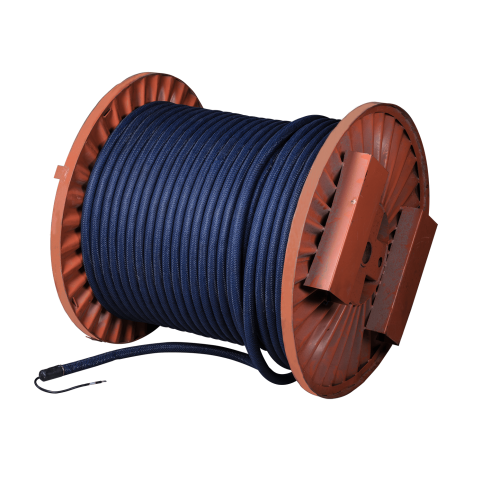
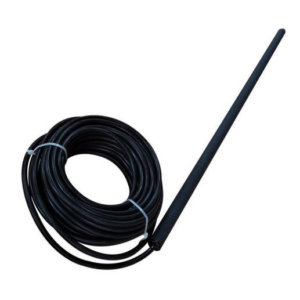
MMO/Ti flexible linear anode is a prefabricated continuous impressed current auxiliary anode system. It adopts composite structural design, specially developed for cathodic protection of buried metallic structures. It provides even current distribution along the protected assets, effectively avoiding over-protection and under-protection issues. This product is widely used for long-distance pipelines and complex underground corrosion protection projects.
2. Product Structure (from inside to outside)
- Copper core conductive cable, insulated with XLPE / HMWPE / PVDF
- MMO mixed metal oxide coated titanium wire (Grade 1 titanium substrate, IrO₂-Ta₂O₅ coating)
- Pre-filled calcined petroleum coke as conductive filler
- Acid & alkali resistant geotextile fabric sleeve
- Outer woven protective net for abrasion resistance
3. Key Features
- Continuous linear current output with uniform current distribution, eliminating protection blind zones and preventing coating disbondment.
- Flexible and bendable, minimum bending radius 500 mm, suitable for narrow spaces such as tank bottoms and complex trenches.
- Prefilled with petroleum coke on factory side, no on-site coke filling required, greatly saving construction time.
- Stable performance in soil with different resistivity, resistant to acid, alkali and saline soil environments.
- Can be cut to required length on site. Special sealed connectors are available for series connection of multiple anode sections.
- Designed service life ≥ 25 years under rated operating conditions, low maintenance cost.
- Main Technical Parameters
| Item | Specification |
| Outer Diameter | 38 ~ 40 mm |
| Copper Core Cross-section | 10 / 16 / 25 / 35 mm² (optional) |
| MMO Titanium Wire Diameter | 1.0 / 1.5 / 2.0 / 3.0 mm |
| Recommended Design Current Density | ≤328 mA/m; customized version up to 984 mA/m |
| Calcined Petroleum Coke | Fixed carbon ≥99%, volume resistivity ≤0.05 Ω·m |
| Unit Weight | Approx. 1.25 ~ 1.35 kg/m |
| Standard Coil Length | 200 ~ 500 m per coil, custom length available |
| Design Service Life | ≥25 years at rated working condition |
| Execution Standard | GB/T 33637—2025 |
5. Application Scope
- Buried long-distance oil & gas pipelines, plant pipe networks and gathering stations
- Bottom cathodic protection for crude oil and chemical large storage tanks
- Buried municipal steel pipelines, reinforced concrete structures
- Rehabilitation & retrofitting of existing pipeline cathodic protection systems
6. Installation Instructions
- Laying: Lay the flexible anode parallel to the protected pipeline, keep designed spacing between anode and pipe. Lay fine sand at trench bottom before installation, backfill with fine soil after laying for protection.
- Connection: Use dedicated T-type sealed connectors to join anode and main cable. Seal the anode end with insulating end cap.
- Caution: Do not drag the anode or scratch it with sharp objects. If fabric sleeve breaks and coke leaks out, repair and seal before backfilling.
- Low-temperature installation: Standard sheath minimum installation temperature 0℃; cold-resistant version down to -20℃.
- Testing: Complete all wiring, test anode loop resistance to pass inspection before power commissioning.
7. Storage & Transportation
- Store coiled anodes in dry and ventilated area, avoid direct sunlight, puncture by sharp objects.
- Handle with care. Do not drop or drag anode coils.
- Keep away from strong oxidants and corrosive chemicals.
8. Safety & Maintenance
- Check insulation integrity before energization to prevent short circuit. Commissioning of cathodic protection rectifier shall be operated by certified corrosion protection engineers.
- Monitor output current, loop resistance and structure protection potential periodically.
- Welding and heavy machinery rolling are forbidden within the anode laying zone.
9. Ordering Information
Please provide below data when placing order: copper core size, titanium wire diameter, total required length, lead cable specification, soil medium, rated output current, whether connectors & end caps are required.