
 ZH
 EN
 JA
 DE

新闻
防腐蚀电极板指南:基材选择和边缘质量
Specifying and Sourcing Flat Metal Substrates for Electrode Applications
Specifying a reliable anti corrosion electrode plate usually starts long before any precious metal coating or active electrochemical layer is applied. In industrial cells, electrochlorination systems, and wastewater treatment skids, the mechanical integrity of the plate itself determines how well the component handles current distribution, physical mounting, and chemical exposure. When sourcing managers review flat metal components intended for corrosive environments, they frequently encounter parts that appear deceptively simple: a flat 2D cut profile, an integrated busbar tab, and an unfinished mill surface.
Understanding where a raw cut blank ends and a finished functional electrode begins is critical to avoiding costly rework or early field failures. If a base substrate has micro-cracks along its cut perimeter or surface contaminants from the cutting bed, downstream passivation, platinizing, or mixed metal oxide (MMO) coatings can fail prematurely.

Profile Geometry: Why Simple Tabs Matter
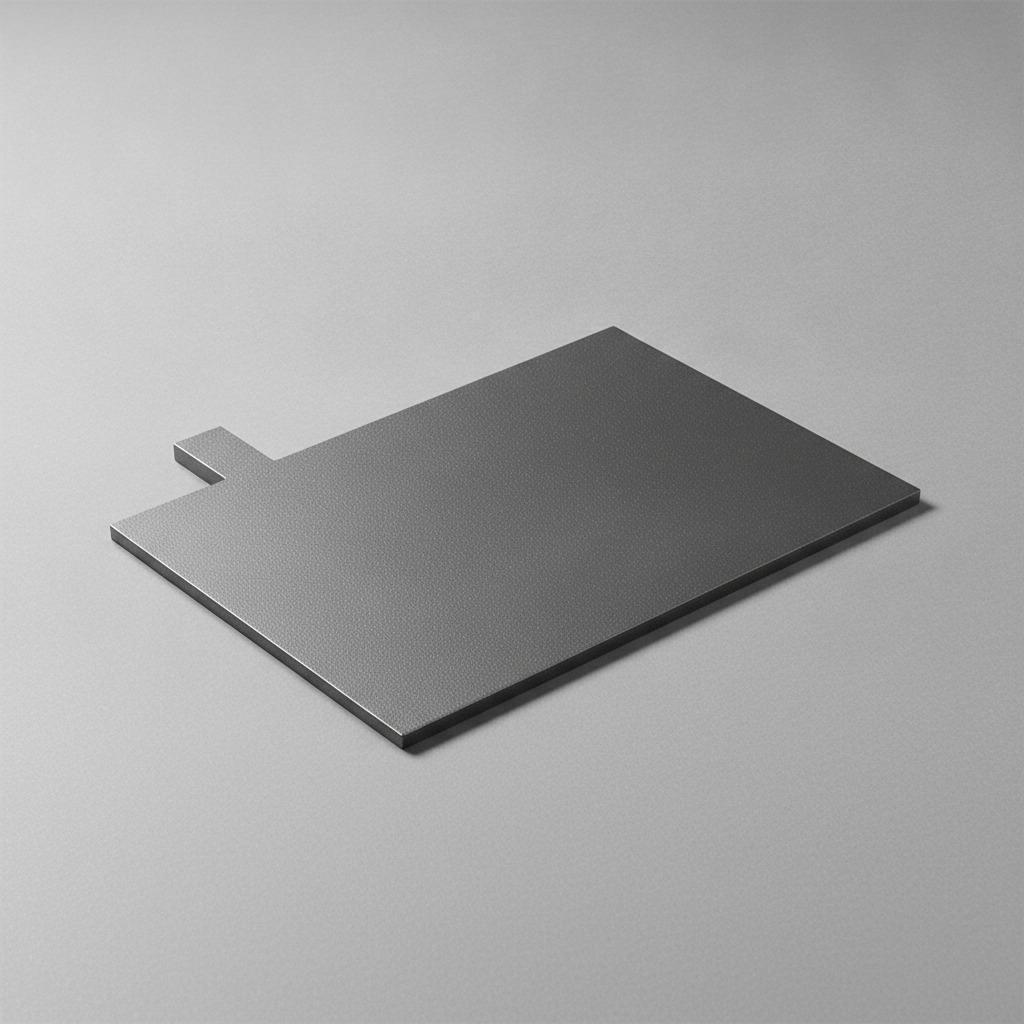
Many industrial electrode plates rely on a single-piece profile rather than welded assemblies. A common geometry features an elongated rectangular strip with a short rectangular tab projecting from one long edge, positioned toward the upper third of the part. This tab serves a dual purpose:
-
- Electrical connection: It acts as an integral contact pad for clamping to busbars or terminal leads, eliminating the joint resistance and corrosion risk that comes with welded lugs.
-
- Suspension point: It allows the plate to hang vertically in an electrolyte bath or cell rack while keeping connection hardware above the aggressive fluid line.
Because these plates often operate in compact, stacked cell configurations, flatness across the entire strip is paramount. A bow or twist of even a few millimeters can cause uneven current density across the gap between opposing plates, accelerating local pitting or chemical degradation on the active surfaces.
Substrate Material vs. Corrosion Barrier: The Sourcing Reality
It is relatively common in manufacturing audits to see uncoated blanks—exhibiting a dark grey, matte, fine-grained mill or pickled finish—classified broadly as structural blanks for electrochemical assemblies. While plain ferrous or carbon steel profiles are sometimes used for sacrificial anodes in low-risk ground beds, an anti corrosion electrode plate destined for aggressive chemical media requires a clear separation between base metal fabrication and surface protection.
A bare, cut ferrous plate will rapidly oxidize unless it undergoes secondary finishing. Depending on the final duty cycle, such plates typically serve in one of three paths:
-
- Pre-treatment substrate: The bare 2D blank is cleaned, etched, and electroplated with nickel, lead dioxide, or noble metals to form an impermeable protective envelope.
-
- Sacrificial consumable: In certain cathodic protection or electrocoagulation setups, standard carbon steel plates are intentionally allowed to corrode at a calculated rate to protect surrounding infrastructure or destabilize suspended solids.
-
- Prototype verification: Flat blanks cut from sheet stock are regularly used to validate physical clearances, cell frame fixturing, and electrolyte fluid dynamics before committing to expensive titanium, niobium, or specialty alloy blanks.
Evaluating Edge Quality and Cutting Processes
How a flat plate is separated from sheet stock directly affects how well it resists corrosion in service. Standard sheet-cutting operations yield distinctly different edge characteristics that buyers must account for:
Laser Cutting: Clean, repeatable, and capable of holding narrow profile contours, but assist gases matter. Cutting ferrous plate with oxygen leaves a thin oxide layer and heat-affected zone (HAZ) along the edge. In corrosive chemical baths, this oxidized edge is often the first point of delamination if the plate is subsequently coated. Nitrogen-assist cutting or secondary edge pickling is generally preferred.
Waterjet Cutting: Waterjet eliminates thermal stress and edge hardening entirely, making it an excellent choice for alloys prone to micro-cracking. However, it introduces abrasive particles that must be completely degreased and flushed prior to electrochemical plating.
Stamping and Blanking: Highly cost-effective for large-volume production of thin-to-medium gauge strips. However, stamping inevitably introduces a rollover zone, a shear zone, and a breakout burr. Sharp edges and burrs create localized high-current spikes (edge effect) in electrochemical cells, requiring secondary vibratory tumbling or edge radiusing before the component can function reliably.
Practical Buyer Checklist for Sourcing Flat Metal Plates
When requesting quotes for cut-to-shape electrode plates or custom metal blanks, providing a 2D DXF file is rarely enough. Sourcing teams should clarify several baseline parameters with fabrication suppliers:
-
- Edge condition: Specify whether parts must be deburred, vibratory tumbled, or delivered with as-cut edges. A slight burr might be acceptable for a basic mounting shim, but an electrode profile requires a clean, uniform edge.
-
- Surface cleanliness: Mill scale, oils, and cutting slag must be chemically stripped if the blank is transitioning directly into an electroplating or coating line.
-
- Thickness consistency: Ensure the raw sheet stock has tight thickness tolerances; thickness variations directly influence current capacity across the contact tab.
-
- Packaging: Bare ferrous plates ship easily, but without corrosion-inhibiting paper (VCI) or light oiling, atmospheric moisture can ruin surface uniformity before the parts even arrive at your facility.
常见问题解答
Can an uncoated ferrous blank function as an anti corrosion electrode plate?
Only if the application is sacrificial (such as electrocoagulation or basic cathodic protection) where the plate is engineered to dissolve. In permanent or dimensionally stable anode applications, a raw steel blank requires protective cladding, high-grade nickel plating, or substitution with an inert substrate such as grade 1 or grade 2 titanium.
Why are mounting holes often omitted from electrode plates?
Holes in the immersed section of an electrode can cause turbulent fluid flow, dead zones, and uneven electrical fields. Many engineers prefer an extended solid tab or a plain rectangular upper profile that clamps directly into cell busbars outside the liquid volume, minimizing leak paths and chemical attack on fasteners.
What should I inspect first when evaluating sample plates?
Check edge squareness and tab perimeter transition. Stress concentrations and sharp corners at the base of a tab can snap under repeated cell maintenance or vibration. A slight radius at the junction between the main strip and the projecting tab provides significantly better mechanical life.
采购团队的下一步工作
If you are developing custom electrochemical cells or looking to streamline your metal blank procurement, start by defining your operating environment: chemistry, bath temperature, and current density. Send your engineering drawings—including edge break callouts and flatness requirements—to your fabrication partner to determine whether laser cutting, waterjet, or high-speed stamping yields the most cost-effective base component for your process.