未分类

Titanium Anode Performance: What Affects Life and Efficiency

What titanium anode performance really means

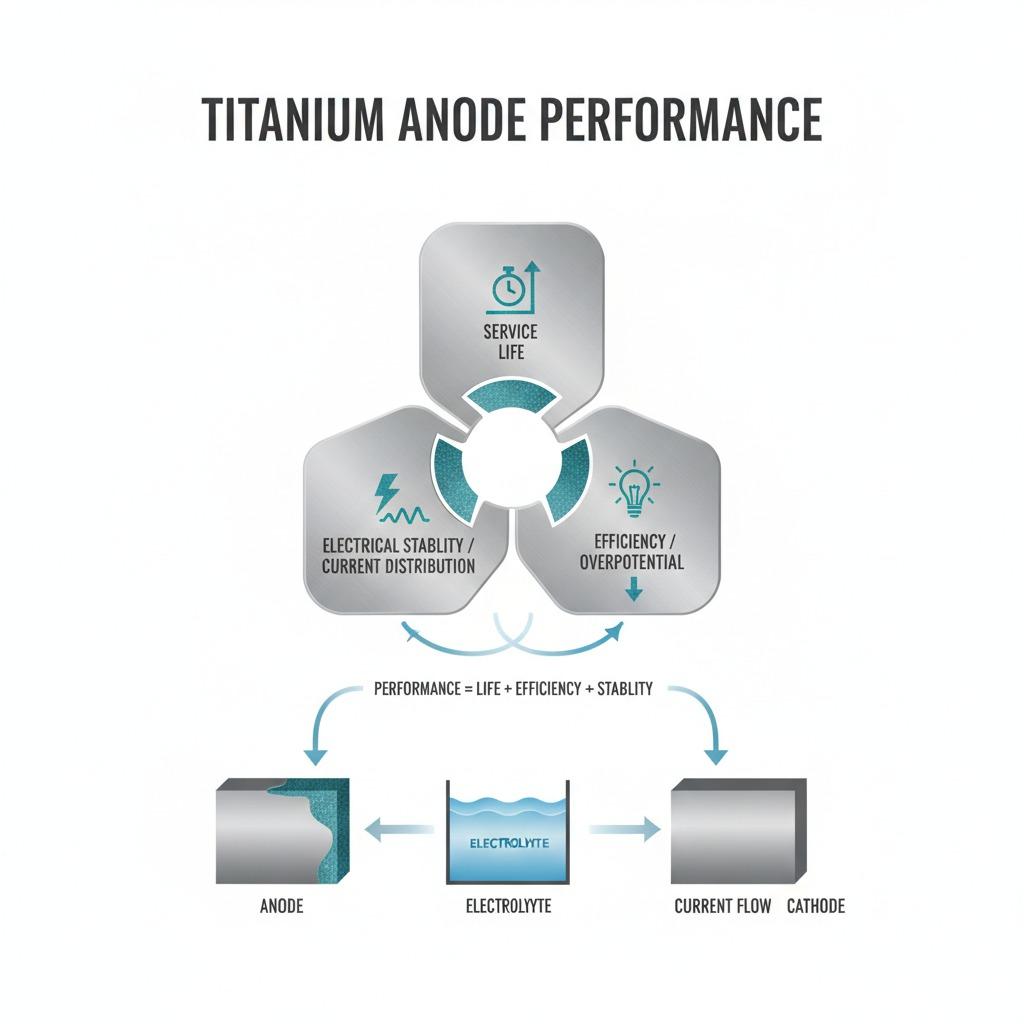
When buyers talk about titanium anode performance, they are usually talking about more than one thing at once: how long the anode lasts, how steadily it carries current, how it behaves in a specific electrolyte, and whether it keeps doing the job without driving up power use or maintenance. That matters because a titanium-based anode is rarely a generic drop-in part. It is a process component, and the wrong choice can mean poor coating life, unstable output, or a cell that looks fine on paper but disappoints in service.

In practice, the substrate is only part of the story. The titanium gives the anode its shape, corrosion resistance, and mechanical backbone, but the working surface is often a catalytic coating designed for a particular electrochemical reaction. So if someone asks whether titanium anodes are “good,” the useful answer is: good for what chemistry, at what current density, and under what operating temperature? That is the decision this article is meant to help with.

titanium anode performance

The main variables that move performance

The first variable is the coating system. Different oxide coatings are tuned for different duties, and the best performer in one service can be a poor fit in another. A chlorine-generating cell, for example, does not ask the same thing of an anode as a water-treatment skid or a metal finishing line. Buyers often focus on the titanium base and overlook the coating formulation, which is a common mistake. In many cases, that coating is what determines overpotential, gas evolution behavior, and usable life.

Second is current density. Push an anode too hard and the coating may age faster, local hot spots can appear, and efficiency can fall off. Stay within the intended operating window and the same part can behave much more predictably. This is why performance data without operating context is only half useful. A supplier claim that sounds strong in one setup may not transfer well to a different bath, electrolyte concentration, or duty cycle.

Third is surface preparation and manufacturing quality. Titanium is unforgiving of sloppy preparation. Clean bonding, consistent activation, and controlled coating application all matter. Small defects at the surface can become the first failure points under load. That is one reason experienced buyers ask not just about the final product, but about the process used to make it.

Why service conditions matter more than brochure claims

Electrolyte chemistry can change the picture quickly. Some environments are relatively friendly; others are aggressive, dirty, or full of side reactions that stress the anode. Temperature also plays a part. Heat does not just shorten life in a general way; it can change reaction behavior, coating stability, and electrical efficiency. A part that looks excellent in a lab coupon test may still age faster in a warm production tank with variable loading.

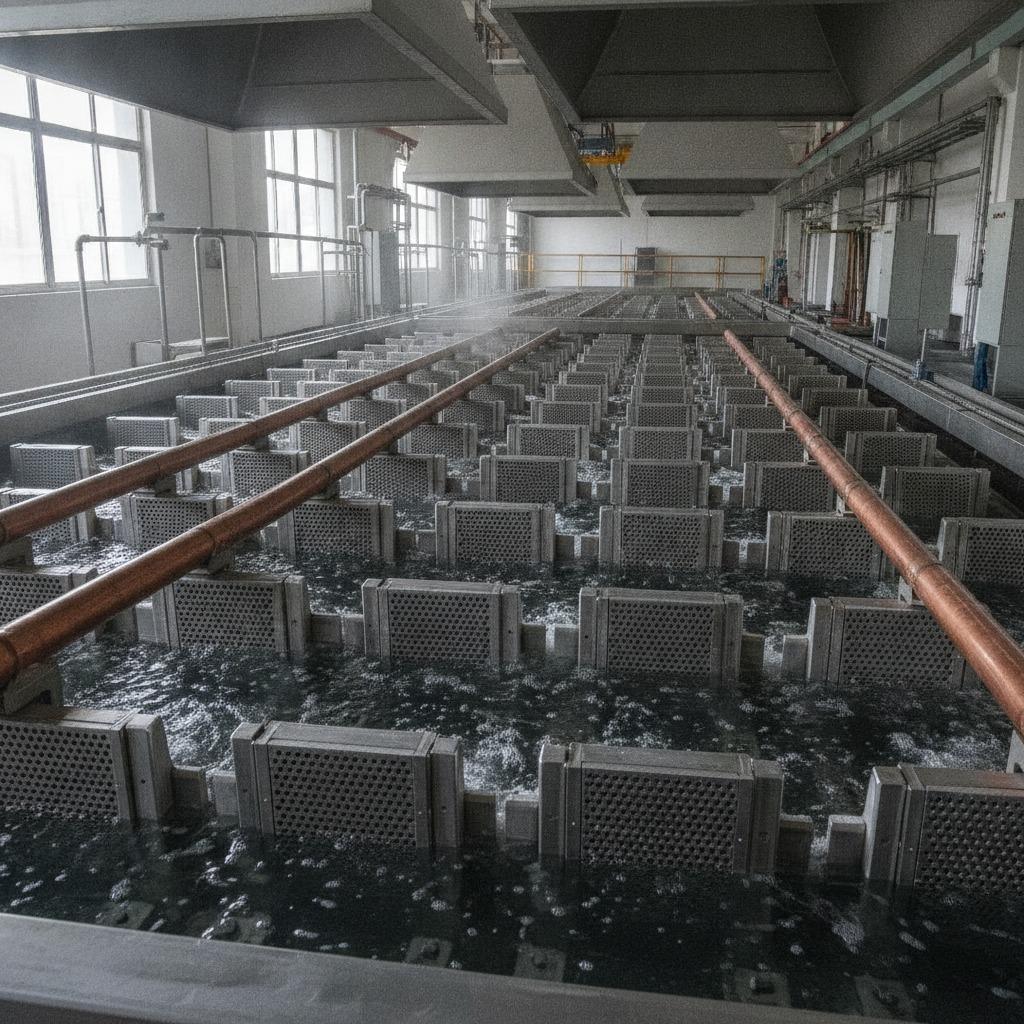
There is also the issue of mechanical form. Sheet, mesh, plate, tube, and custom-formed anodes all trade off exposed area, current distribution, and installation convenience. The best geometry is the one that fits the cell design and gives the current a sensible path. If the anode is oversized, undersized, or mounted awkwardly, performance often looks worse than it should, and the equipment gets blamed instead of the layout.

What to compare when choosing a supplier

Coating fit

Ask what the coating is intended to do, not just what it is called. The right answer should connect the coating to the chemistry and the target duty. If the supplier cannot explain that relationship in plain language, keep asking.

Operating window

Request guidance on current density, temperature range, electrolyte limits, and any restrictions on startup or shutdown. Those parameters are often more valuable than a headline life estimate, especially when your process is not perfectly steady.

Geometry and installation

Look closely at the mounting method, connection points, and whether the design supports even current distribution. A well-made anode that is hard to install correctly is still a risk. In industrial systems, awkward hardware can become a maintenance problem long before the coating wears out.

Maintenance expectations

Some users want a low-touch part that simply runs until replacement. Others can handle inspection and cleaning. The right titanium anode performance profile depends on how much attention the plant can realistically give it. That sounds obvious, but it is frequently ignored during procurement.

买家常犯的错误

One mistake is treating all titanium anodes as interchangeable. They are not. Another is asking only for projected life without clarifying the test conditions. Life numbers without current density, bath chemistry, and temperature are weak evidence at best. A third mistake is buying for today’s load and forgetting tomorrow’s operating changes. If a line is likely to run hotter, longer, or at higher throughput later on, the anode should be selected with that in mind.

It is also worth being cautious about price-driven decisions. A lower-cost anode can be perfectly adequate in the right application, but if the coating is wrong for the chemistry, the savings disappear fast. Replacement labor, downtime, and quality issues usually dwarf the initial purchase difference.

快速买家清单

Before ordering, confirm the process chemistry, operating current, temperature, physical envelope, connection style, and expected maintenance interval. If possible, ask for the supplier’s recommended operating range and any known failure modes. That last point is useful because it shows whether the vendor understands real-world service, not just catalog language.

For projects that are still in development, a small trial run is often wiser than a full rollout. Even a short pilot can reveal whether the anode behaves cleanly under the actual plant conditions. That is especially true when the process includes variable loading, intermittent operation, or contamination risks.

常问问题

Is titanium itself the active surface? Usually not. In many industrial anodes, titanium is the substrate and the coating carries the electrochemical function.

Does a longer life always mean better performance? Not necessarily. The best anode is the one that balances life, efficiency, and process consistency in the actual application.

Can one anode type suit every electrolyte? Rarely. Chemistry matters enough that the coating and geometry should be matched to the service.

切实可行的下一步

If you are comparing options, start with the process, not the product brochure. Define the chemistry, current density, and installation constraints first, then ask suppliers to show how their anode design matches those conditions. That approach usually produces a cleaner selection and fewer surprises once the line is running. It also gives you a much better read on titanium anode performance before money is committed to production hardware.