
 EN
EN  ZH
ZH  JA
JA  DE
DE 
Blog
Titanium Anode Performance: What Buyers Should Check Before Ordering
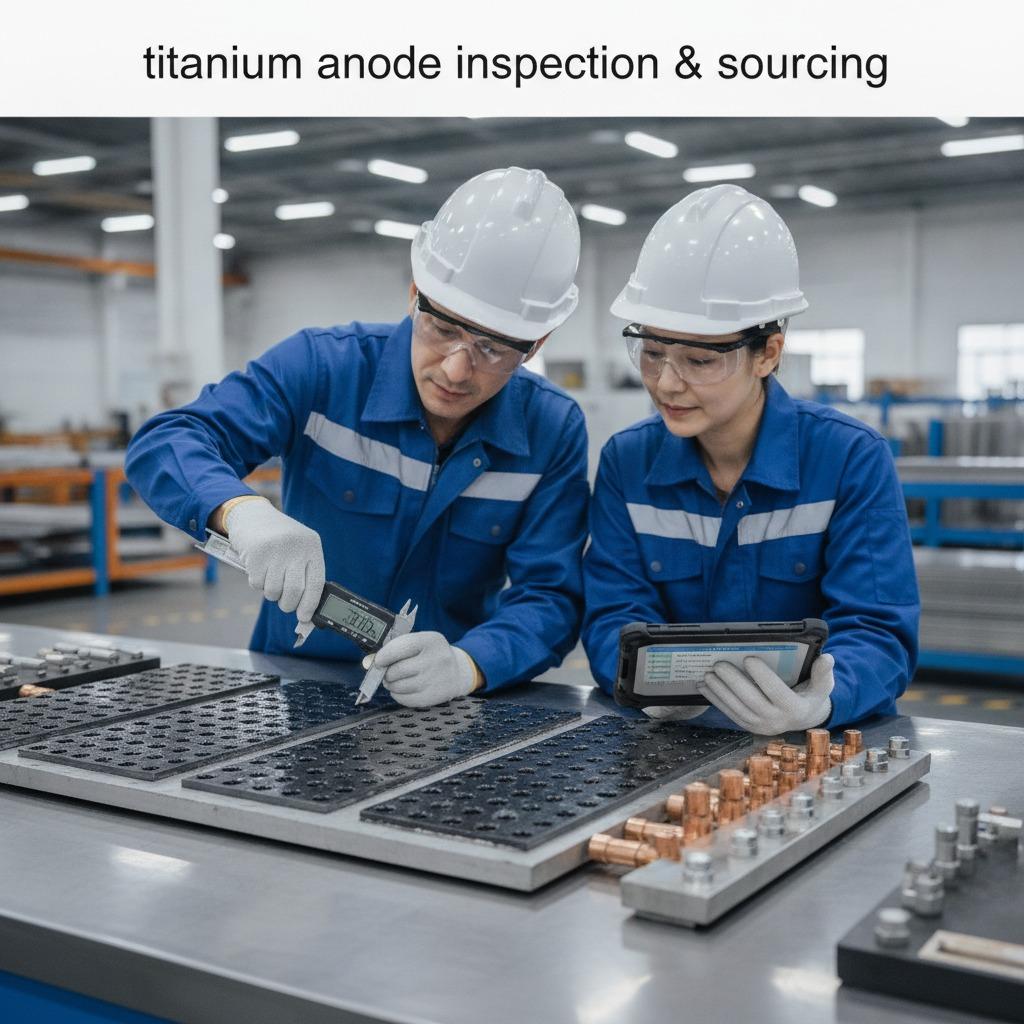
Why titanium anode performance matters before you commit to a build
Titanium anode performance is one of those topics that sounds narrow until a project starts slipping because the electrodes do not hold up in service. For engineers and sourcing teams, the issue is rarely just the anode itself. It is the whole chain of decisions around conductivity, surface treatment, operating chemistry, mechanical fit, and how the anode behaves once it is bolted into a real system. When the wrong choice is made, the failure mode is usually slow at first: higher cell voltage, uneven current distribution, premature coating wear, or more maintenance than the original spec sheet suggested.
That is why buyers should treat anode selection as a performance decision, not a commodity purchase. The right part can stabilize current flow and reduce downtime. The wrong one can look fine on arrival and still underperform after installation. In practical terms, this article helps you decide what to check before ordering titanium anodes for electrochemical, plating, cathodic protection, or similar industrial use.
What buyers usually mean by performance
People often use titanium anode performance as shorthand for several different things. They may mean electrical efficiency, coating durability, chemical resistance, or dimensional stability under load. In a plant setting, those factors interact. A product can have strong corrosion resistance but poor current distribution if the geometry is wrong. It can also be mechanically robust yet still deliver disappointing results if the coating is not matched to the electrolyte.
For sourcing managers, the useful question is not “Is titanium good?” It is “Will this anode keep performing in our operating window?” That depends on the chemistry, temperature, duty cycle, and how the anode connects into the broader system.
The material logic behind titanium anodes
Titanium is widely used as a substrate because it offers a strong balance of mechanical strength and corrosion resistance. In many industrial anodes, the titanium itself is not the active surface. The active performance comes from the coating or treatment applied to the base metal. That distinction matters. A supplier may offer titanium hardware, but the real service life is governed by the coating system and how well it adheres under operating conditions.
In other words, a titanium base can be the right structural choice, but it does not automatically guarantee stable electrochemical behavior. Buyers should ask what the substrate is, what the active layer is, and whether the intended process chemistry matches that combination.
Quick comparison: what to evaluate first
If your team is comparing options, start with the factors that most directly affect service life and process stability:
Coating system compatibility with the electrolyte
Current density requirements
Anode geometry and exposed surface area
Electrical connection quality at the terminals
Expected temperature and cleaning cycles
Installation environment, including splash, fumes, or sediment buildup
That list is not glamorous, but it is where many procurement misses begin. A technically acceptable anode can still be a bad fit if the connection design forces extra resistance or if the geometry creates uneven loading across the active face.
How mechanical design influences performance
Even when the chemistry is right, the physical build has a big effect on real-world results. Long, narrow conductive assemblies, for example, are often used to distribute current in a controlled line. In power systems, busbar-style parts rely on clean contact surfaces, secure bolting, and consistent spacing to avoid hot spots. The same principle applies to anodes: poor contact or awkward mounting can create local losses that show up as heat, voltage drop, or uneven wear.
A simple caution here: do not assume a neat-looking assembly is electrically sound. Threaded studs, washers, spacing elements, and surface finish all matter. If the current path is interrupted by loose hardware or inconsistent contact pressure, performance drops long before anyone sees visible damage.
Common selection mistakes
One recurring mistake is treating all titanium-based parts as interchangeable. Another is focusing on initial cost while ignoring replacement frequency. Teams also sometimes specify the anode before they finalize the operating chemistry, which is backwards. You want the anode chosen for the process, not the process forced to accommodate the part.
A second mistake is overlooking interface details. The connection point, coating edge, mounting orientation, and clearance around the assembly can be as important as the material itself. That is especially true in compact equipment where a low-profile part may fit physically but still be hard to service or inspect.
What to ask suppliers before purchase
Ask for the substrate material, coating type, intended application, and any operating limits the supplier can state confidently. If the supplier cannot explain how the anode behaves under your chemistry and current load, that is a signal to slow down. For OEM projects, it is also worth asking about fabrication method, terminal design, and whether the part can be matched to a family of similar lengths or variants.
For teams already used to buying conductive assemblies, think of the anode the same way you would think about a busbar or connector bar: the geometry, surface condition, and termination details are part of the product, not just packaging around it.
Buyer-facing checklist
Use this before you release the PO
Confirm the process chemistry and temperature range.
Check that the current density matches the anode design.
Review the mounting and bolted connection details.
Ask how the coating or active layer is specified.
Plan for inspection and replacement access.
FAQ: a few practical questions that come up
Is titanium always the active material? No. In many industrial anodes, titanium is the substrate and the coating does the electrochemical work.
Why do some anodes fail early? Common reasons include incompatible chemistry, poor electrical connection, uneven loading, or a coating that is not suited to the duty cycle.
Should I prioritize geometry or coating? You usually need both. A strong coating cannot compensate for a badly designed current path.
Next step for engineering and sourcing teams
If you are evaluating titanium anodes for a new line, replacement schedule, or equipment refresh, start by documenting the operating environment and connection requirements before comparing vendors. That makes supplier discussions much more productive and reduces the chance of choosing a part that looks right on paper but underperforms in the field. If you are also reviewing conductive assemblies or custom connector bars for the same system, compare the electrical interface as carefully as the base material; in these builds, the details decide the outcome.