
 EN
EN  ZH
ZH  JA
JA  DE
DE 
Blog
Water Treatment Titanium Anode Plate: What Buyers Should Check
Why a water treatment titanium anode plate matters in the first place
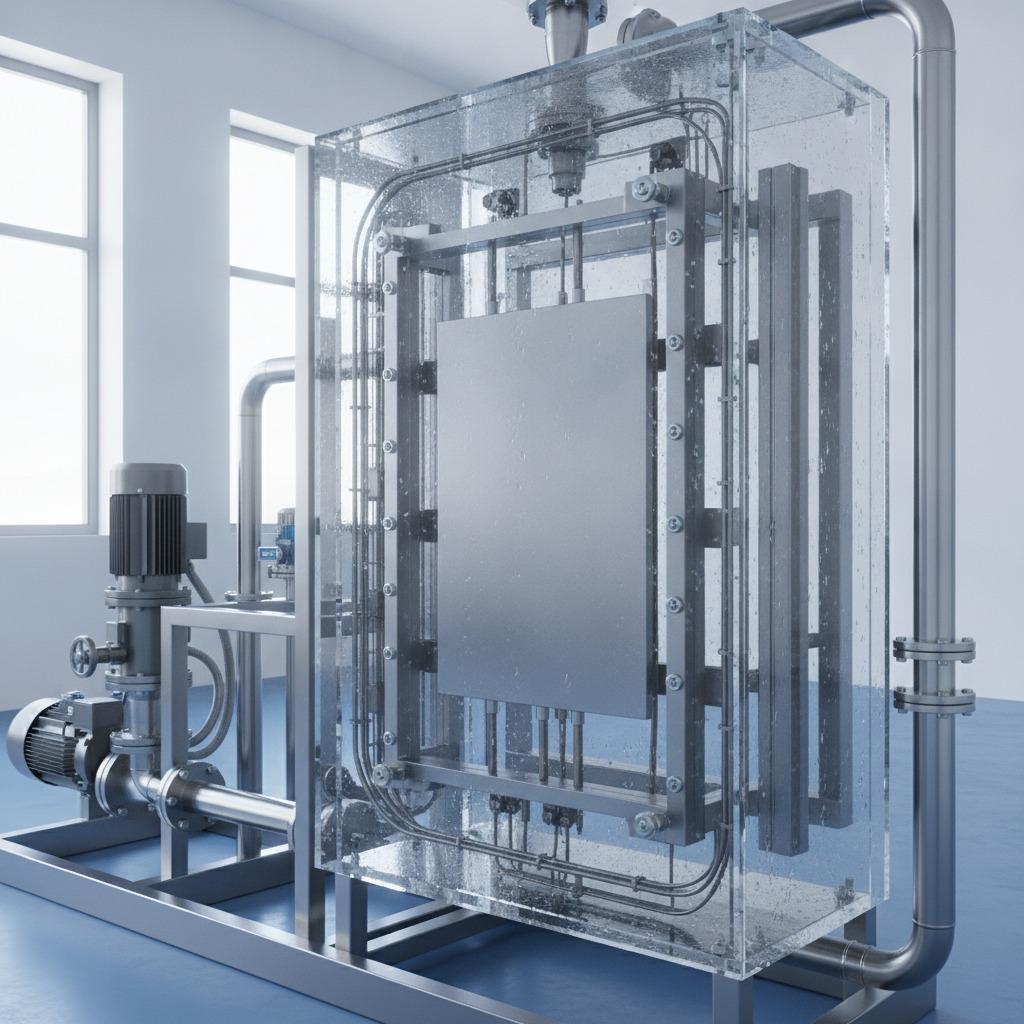
A water treatment titanium anode plate is one of those components that tends to disappear into the equipment until it fails. Then it becomes the only thing anyone wants to talk about. In electrochemical water treatment, the anode is not just a sacrificial metal plate; it is the active surface that helps drive the reaction, whether the system is being used for disinfection, oxidation, scaling control, or another treatment step. If the anode choice is wrong, the operator pays for it in unstable performance, shorter service intervals, or maintenance that arrives too early.
For engineers and sourcing managers, the real question is not “what is titanium?” but “what kind of anode construction fits the water chemistry, electrical load, and maintenance expectations of this system?” That decision affects uptime, replacement planning, and total cost more than a purchase order line often suggests.
What buyers are usually trying to solve
Most buyers start with a basic problem: they need an anode that can stay dimensionally stable in service and support consistent electrochemical performance. Titanium is widely used as a base material because it is valued for corrosion resistance and structural reliability in demanding environments. In water treatment hardware, titanium is often selected as the substrate for coated anodes rather than as the active coating itself.
That distinction matters. The titanium plate is typically the support structure, while the functional behavior comes from the surface treatment or coating system. If you are comparing options, do not stop at the word “titanium.” Ask what the plate is doing, what coating is applied, and how the part is intended to be installed and powered.
Quick reference: what to check before specifying one
1. Water chemistry
Chloride levels, pH, temperature, and dissolved solids all influence anode behavior. A plate that looks fine on paper may age quickly in a harsher electrolyte.
2. Current density and duty cycle
A water treatment titanium anode plate used in light intermittent service is a different purchase from one running continuously at a higher electrical load. Oversight here can lead to premature wear or uneven performance.
3. Geometry and contact design
Flat plates are chosen often because they are practical to mount, easy to package into arrays, and easier to inspect. Straight edges and consistent width help when the plate needs to align with a holder or electrode stack.
4. Replacement strategy
If the system is built for routine replacement, buyers should favor a plate design that is easy to remove and reinstall without disturbing adjacent parts.
How titanium anode plates are typically used in water treatment systems
In broad terms, a titanium anode plate sits inside an electrochemical setup and provides the shape and support needed for the active electrochemical surface. Depending on the application, that may mean a flat plate, a mesh, or another form factor better suited to the flow path and electrode spacing.
Flat plates are common where the design favors a simple, uniform electrode face. They can be useful in treatment chambers, test rigs, pilot systems, or compact assemblies where predictable geometry is more important than maximizing open area. The exact choice depends on the system design, not just the metal.
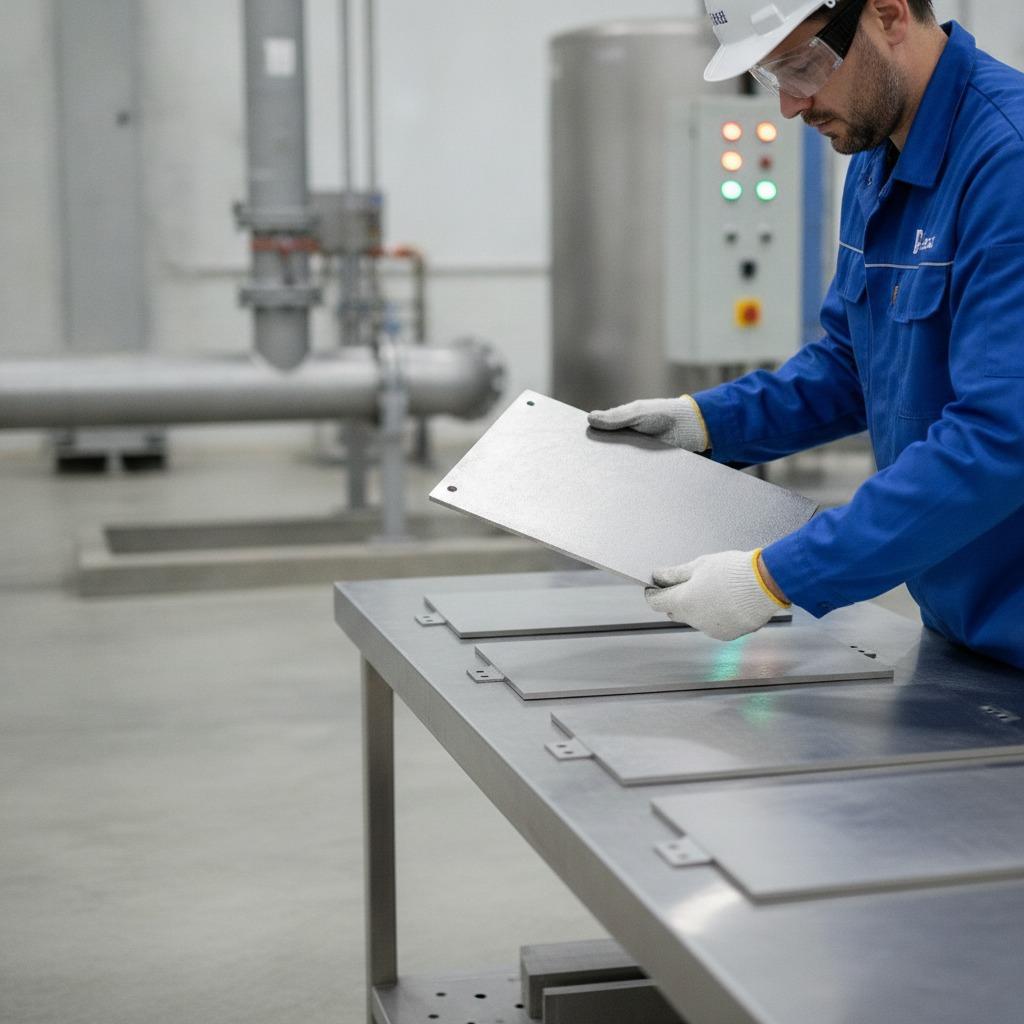
One practical caution: if a buyer is only shown a photograph, it is easy to mistake a generic metal plate for a finished anode. Visual similarity is not proof of performance. For procurement, surface treatment, substrate grade, and connection details all deserve separate verification.
Common mistakes in sourcing
One frequent mistake is treating all titanium plates as interchangeable. They are not. A plate can be cut cleanly and still be unsuitable if the coating, thickness, or mounting method does not match the electrical and mechanical demands of the unit.
Another mistake is ignoring the interface. A well-made anode plate still fails if the connection point is awkward, fragile, or difficult to keep stable in service. Buyers should also ask whether the plate is meant to be a consumable, a long-life electrode, or a test piece for process validation. Those are very different procurement categories, even if the part looks similar on a shelf.
What the image suggests, and what it does not
The visible product data describes a set of four flat rectangular metal strips or blades, with consistent geometry, a matte metallic finish, and small top attachment points. That kind of shape is consistent with industrial plates, inserts, or sample blanks used where a straight flat edge is needed. It does not, however, confirm the exact alloy, thickness, coating, or intended machine.
For sourcing teams, that is a useful reminder: a photo can tell you a part is straight, uniform, and likely machined or cut from flat stock. It cannot tell you whether it will survive in a water treatment system.
Buyer-facing questions worth asking
Before placing an order, ask the supplier:
What is the titanium grade or substrate specification?
What coating or active surface treatment is applied?
Is the plate intended for water treatment, testing, or another industrial use?
How is the plate mounted or electrically connected?
What inspection documents are available for the batch?
Those questions sound basic, but they are usually where project risk is hidden.
Next step for engineers and procurement teams
If you are evaluating a water treatment titanium anode plate for a new system or a replacement program, start with the operating environment and the installation geometry. Then confirm the substrate, coating, and connection method before comparing price. A cheaper plate that does not match the duty cycle is not a bargain; it is a delayed maintenance problem.
For the best results, align the plate design with the chemistry, current load, and service interval you actually need, not the one that looks close enough on a datasheet.