
 DE
 EN
 ZH
 JA

Der Blog
Leitfaden für Hochleistungs-Titananoden: Individuelle Geometrie, Zuschnitt und Beschaffung
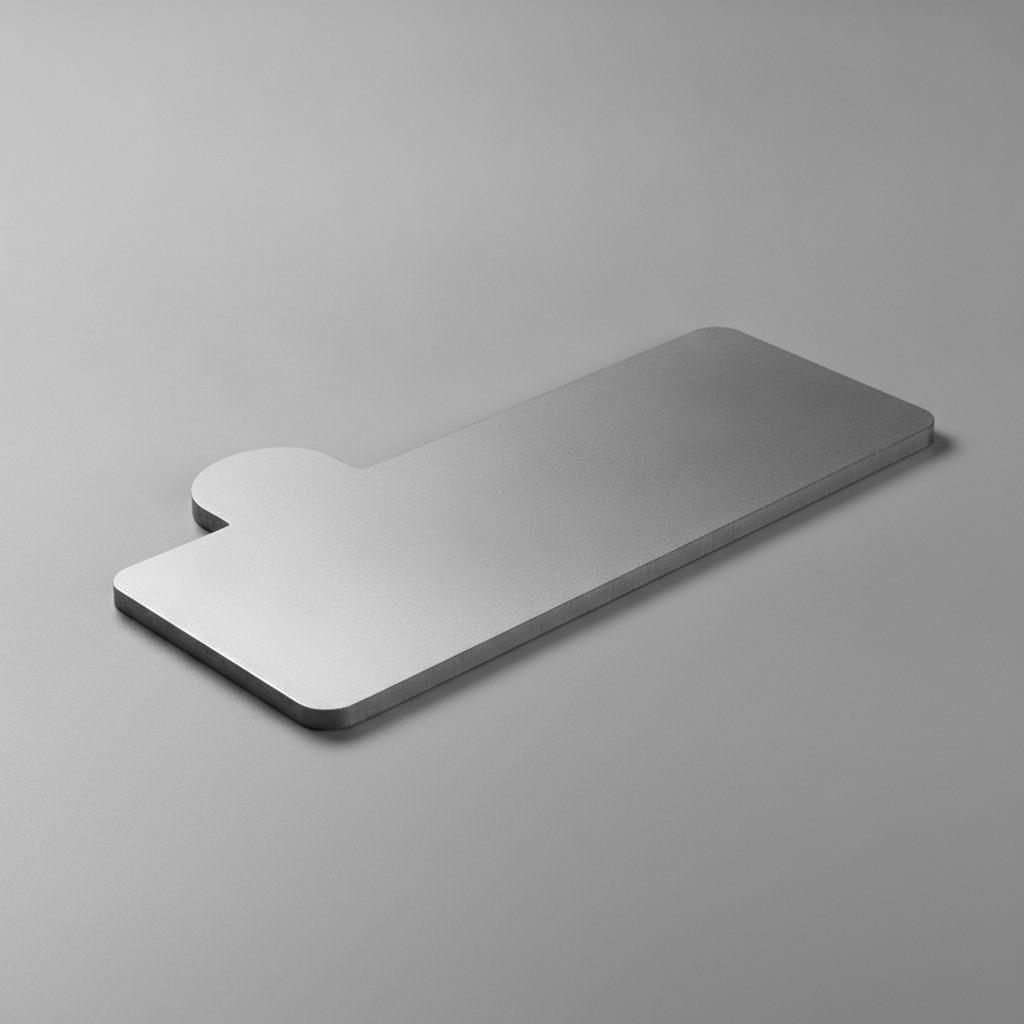
Navigating Custom Titanium Anode Sourcing: From Raw Blank to Electrochemical Cell
Specifying a high performance titanium anode is rarely as simple as selecting a standard catalog number. In industrial electrochemistry—spanning wastewater treatment, electrowinning, electroplating, and cathodic protection—anodes frequently demand custom geometries designed around proprietary cell architectures. Sourcing teams often receive initial drawings that look remarkably straightforward: a flat, elongated plate with an offset tab or a stepped profile. Yet treating these components as simple sheet-metal cutouts is a common misstep that can compromise current distribution, catalyst adhesion, and operational service life.
Whether you are procuring unetched titanium blanks for in-house coating or commissioning fully assembled electrodes, bridging the gap between mechanical fabrication and electrochemical performance requires a deliberate selection approach. This guide outlines how to evaluate custom flat profiles, specify substrate requirements, and avoid costly downstream manufacturing pitfalls.
Understanding the Blank Geometry: Tabs, Edges, and Current Paths
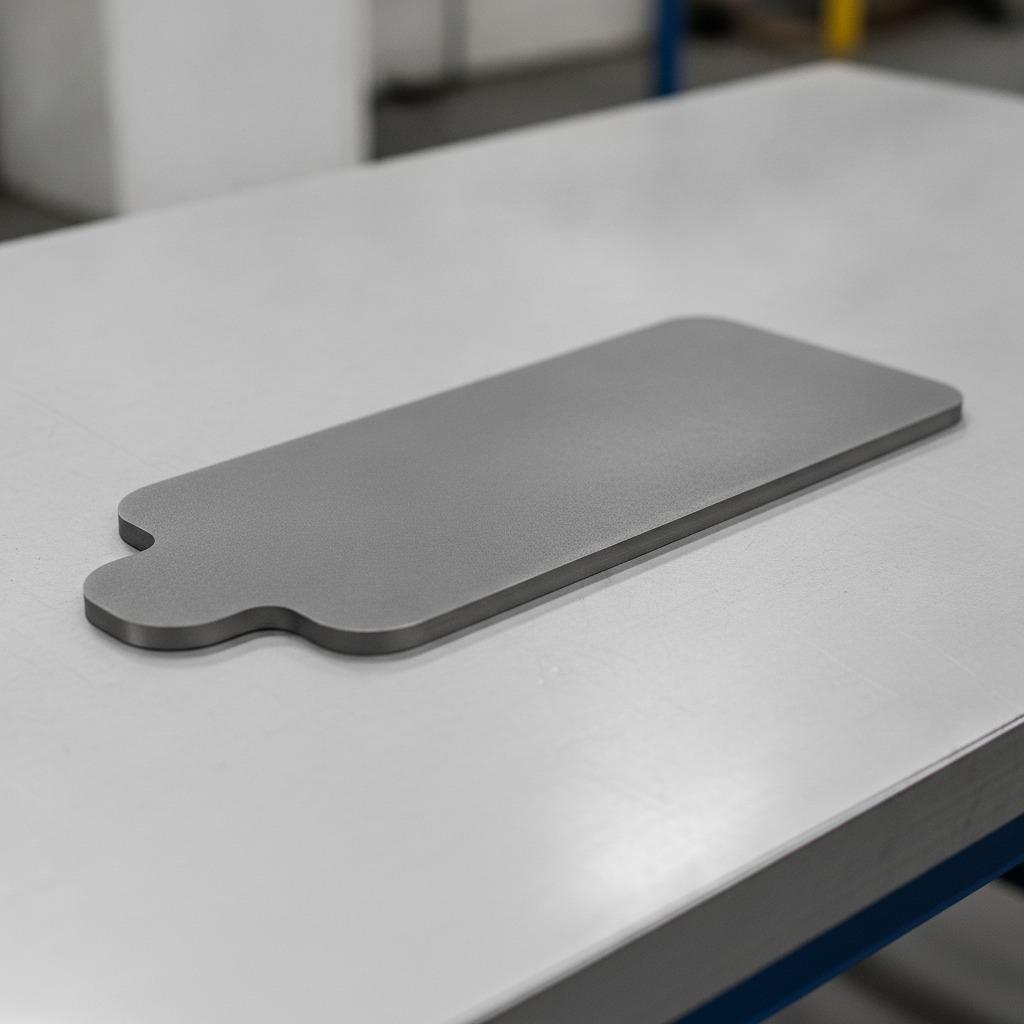
A common configuration seen in custom cell design is an elongated, single-piece flat part featuring an asymmetric, rounded tab projecting from one edge. While this geometry appears simple, every physical boundary serves a distinct functional purpose once energized.
The projecting tab typically acts as the electrical connection point, busbar interface, or mechanical locator within the cell rack. Because electrical current enters through this tab and disperses across the broader rectangular active surface, transition geometry matters. Sharp internal corners between the tab and the main body can concentrate mechanical stress and create uneven current density gradients. A radiused transition helps maintain uniform field lines and minimizes tear risks during handling or cell assembly.
Edge quality is equally critical. In electrochemical applications, sharp burrs or micro-serrations left by thermal or mechanical cutting act as focal points for localized high current densities, commonly called “current crowding.” In plated or coated applications, these high-current zones can trigger premature edge flaking, localized passivation, or accelerated consumption of expensive mixed metal oxide (MMO) catalytic layers.
Step 1: Choose the Right Cutting Process for Titanium Substrates
Titanium sheet and plate components with custom tabs and contours are typically produced using flat-sheet cutting technologies. Choosing the wrong cutting method can damage the metallurgical integrity of the edge before the part ever sees chemical processing.
- Abrasive Waterjet Cutting: Widely regarded as the safest baseline method for reactive metals like titanium. Waterjet is a cold process that introduces zero heat-affected zone (HAZ) and prevents surface oxidation during the cut. It maintains material ductility along the perimeter, making it ideal if the tab or body must undergo subsequent forming or bending.
- Precision Laser Cutting: Highly cost-effective for thin-to-medium gauges and high-volume runs. However, cutting titanium with laser systems requires close control over assist gases. Using nitrogen or oxygen creates an ultra-hard, brittle recast layer (titanium nitride or oxide) along the cut edge. For electrochemical use, this edge layer must typically be mechanically trimmed or chemically etched away to prevent poor coating adhesion or uneven electrical conduction.
- Stamping and Die Blanking: Suited primarily for high-volume, thin-gauge production. While fast, tooling costs are high, and edge breakout can leave rollover burrs that require secondary tumbling or deburring.
Step 2: Surface Preparation and Substrate Integrity
Raw titanium cut blanks usually display a dark grey, non-reflective, matte mill finish. While an unfinished blank is acceptable for initial mechanical prototyping or structural spacing, an active anode cannot function efficiently in this state without targeted surface conditioning.
A high performance titanium anode relies on an engineered catalyst layer—such as iridium-tantalum oxide, ruthenium oxide, or platinum—metallurgically bonded to the titanium core. Titanium naturally develops an insulating passive oxide film when exposed to air or electrolyte solutions. To ensure coating adhesion and electrical conductivity:
- The raw mill finish must undergo degreasing to remove shop oils and cutting residues.
- Mechanical grit blasting (using non-ferrous media like alumina) is standard practice to create an anchor profile, dramatically increasing the micro-surface area.
- Acid etching (commonly in hot oxalic or hydrochloric acid) removes the native, passivated oxide and creates a micro-etched topography tailored to mechanical interlocking with the catalyst coat.
If you are sourcing cut substrates to be coated by a secondary partner, ensure your cutting vendor delivers parts free of heavy oil contamination, embedded abrasive particles, or deep surface gouges that could disrupt coating thickness consistency.
Comparison: Raw Cut Blank vs. Finished Anode Assembly
Before issuing a Request for Quotation (RFQ), clarify which phase of manufacturing your bill of materials actually addresses:
- Fabricated Base Blank: Flat, cut profile; tight mechanical tolerances; unfinished matte or pickled surface; no active coating. Intended for fabricators who perform downstream surface etching, MMO application, and thermal decomposition in-house.
- Electrode Assembly / Functional Part: Substrate cut to shape, pre-treated, coated with specified noble metal loading, and tested for accelerated life and contact resistance. Ready for direct installation in the electrolyte bath.
Common Buyer Pitfalls to Avoid
Engineers and sourcing managers frequently encounter avoidable production delays by overlooking small fabrication details on flat titanium parts:
- Neglecting Flatness Tolerances: Thin titanium sheet blanks can carry internal residual stresses from the rolling mill. Following laser or waterjet profile cutting, these stresses can release, leading to slight bowing or twist. In tight-tolerance electrochemical stacks, non-flat plates result in variable inter-electrode gaps, causing uneven cell voltage and localized hotspotting.
- Assuming Unspecified Materials: Commercial purity titanium (ASTM B265 Grade 1 or Grade 2) is the standard substrate choice due to its corrosion resistance and formability. Grade 1 offers slightly higher ductility and lower interstitial impurities, whereas Grade 2 offers higher mechanical strength. Never leave the alloy grade open to the fabricator’s discretion, as higher-strength structural alloys (like Grade 5 / Ti-6Al-4V) exhibit poor substrate compatibility in many electrochemical systems.
- Overlooking Tab Thickness Compatibility: A tab that is too thin relative to the plate area may generate excessive resistive heating under high operational amperages, increasing cell operating costs and shortening electrode life.
Procurement Checklist for Custom Titanium Plates
When sending drawings for custom tabbed blanks or plates to fabricators, provide clear definitions across four core areas:
- Base Material & Grade: Explicitly state ASTM B265 Grade 1, Grade 2, or application-approved alternative.
- Allowable Edge Condition: Specify maximum acceptable burr height and whether deburring or edge rounding is required. Indicate if thermal cutting HAZ is permitted.
- Flatness Limits: State total indicated runout across the length of the part, particularly if the component mounts between tightly spaced membrane separators.
- Secondary Operations Scope: Clearly define whether the fabricator is responsible only for blanking, or if chemical cleaning, surface etching, or coating preparation is bundled into the order.
Häufig gestellte Fragen
Can I use a sheared titanium plate instead of laser or waterjet cutting?
Shearing is possible for simple rectangular geometries, but it frequently produces micro-cracks and significant burrs along the cut edge due to titanium’s work-hardening tendencies. For tabbed or stepped profiles, CNC waterjet or controlled laser cutting yields far more consistent dimensional repeatability.
Why is my prototype blank warping during fabrication?
Titanium sheets often retain directional rolling stresses. If you cut narrow, elongated blanks with asymmetric tabs, stress relief during cutting can cause camber or bow. Specifying stress-relieved or flattened sheet stock prior to cutting mitigates this issue.
How do I confirm if a matte grey blank is titanium or stainless steel?
Visual inspection alone cannot distinguish dark, matte titanium from non-reflective stainless steel or cold-rolled mild steel. Non-destructive verification via X-ray fluorescence (XRF) material analyzers or density testing is recommended prior to introducing raw stock into chemical production lines.
Take the Next Step in Your Cell Component Sourcing
Optimizing custom component design begins with clear drawings and well-defined functional requirements. If your project involves integrating a custom flat profile or tabbed substrate into an active cell, review your current density targets and edge-finish requirements with your fabrication partner before finalizing production tooling.