
 DE
DE  EN
EN  ZH
ZH  JA
JA 
Der Blog
Kathodenschutzanodenplatte: Wichtige Auswahl- und Beschaffungstipps
Why Cathodic Protection Anode Plates Deserve More Attention Than They Usually Get
A cathodic protection anode plate is one of those components that rarely gets the spotlight until a corrosion problem shows up in the field. Then suddenly the conversation shifts from procurement to downtime, and from line item cost to asset life. For engineers and sourcing teams, the real question is not whether the plate is simple. It is whether the anode plate is the right form factor, the right material family, and the right fit for the structure, soil, water, or enclosure it is meant to protect.
That matters because cathodic protection systems depend on consistency. A plate may look plain, but its geometry, surface condition, electrical behavior, and installation method all influence how current is distributed. Choose poorly and you can end up with uneven protection, wasted material, or a maintenance cycle that starts much earlier than planned.

What an Anode Plate Does in a Protection System
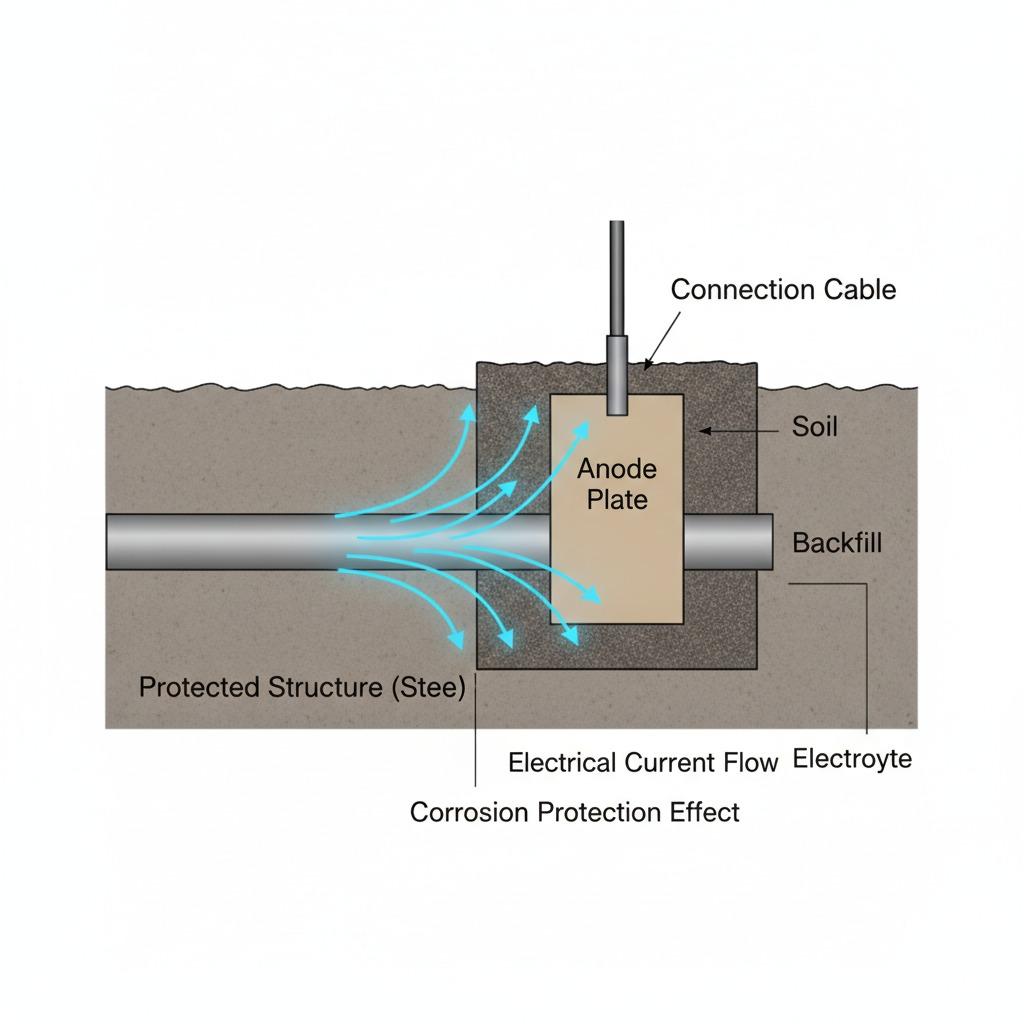
In practical terms, the plate serves as a sacrificial or impressed-current element that helps shift corrosion away from the structure being protected. Depending on the system design, it may be installed in soil, submerged environments, or attached to a surface assembly. The plate format is often chosen when a broad contact area, stable placement, or compact installation footprint is useful.
Compared with rod or wire formats, a plate can offer a different current distribution profile. That does not make it universally better, but it does make it useful in applications where geometry matters. In field work, geometry almost always matters more than people expect.
Key Selection Factors Buyers Should Review
Material compatibility
The base material determines how the plate behaves over time. In cathodic protection work, that usually means matching the anode chemistry to the electrolyte, target structure, and design life. If the environment is aggressive, the material choice becomes less forgiving. This is not an area where a generic substitute is a safe shortcut.
Surface area and current demand
Plate dimensions affect current output and how evenly the system performs. Larger surface area can help distribute current, but the whole design still depends on load, spacing, and installation conditions. A buyer should ask whether the supplied plate is intended for a specific current output range or just offered as a standard blank.
Mounting and connection method
The simplest-looking plate can still create installation headaches if the connection point is awkward or the attachment method is not standardized. The side tab or protrusion seen in some flat sheet parts is a reminder that small geometry changes often serve a functional purpose: locating, indexing, hanging, or connecting. If that feature is undocumented, it should be clarified before release to production.
How Plate Form Factor Influences Manufacturing
From a manufacturing point of view, a plate is usually easier to produce than a complex formed part, but that simplicity can be deceptive. Flat sheet parts rely on clean cutting, dimensional consistency, and material uniformity. Die cutting, stamping, knife cutting, and similar sheet processes are common in adjacent industrial parts because they handle simple outlines efficiently.
For cathodic protection hardware, the same logic applies: the edge quality, thickness consistency, and repeatability of the plate matter. A rough or inconsistent edge can affect fit-up and, depending on the system design, may complicate installation or handling. If the plate is part of a larger assembly, the small tab or notch features should be treated as functional, not decorative.
Common Buyer Mistakes
One frequent mistake is treating all anode plates as interchangeable because they look similar on paper. They are not. Another is specifying only the physical outline without defining the material system, electrical target, or installation environment. That is how a simple purchase becomes a rework project.
A second mistake is overlooking the difference between a proof-of-concept sample and a production-ready part. A flat sheet component may appear straightforward, but if the real application depends on dimensional repeatability, alignment, or a specific connection detail, the sample stage is not the same as the released design.
Practical Advice for Engineering and Sourcing Teams
If you are reviewing a cathodic protection anode plate, start with the service environment, then move to material, then to geometry. That order saves time. Ask for the intended use case, the installation method, and any critical dimensions tied to fit or current distribution. If the supplier presents a flat gray rectangular blank with a tab and no markings, do not assume the function from appearance alone. The same shape could serve as an insert, spacer, template, or protective component in another context.
For sourcing, the safest path is to confirm the part’s role in the system before approving alternates. For engineering, the safest path is to check whether the plate geometry is doing more than it seems. Small features often carry the load in large systems.
What to Clarify Before You Place an Order
Before release, clarify the material composition, thickness, target application, connection requirements, and any environmental constraints. If the item is a cut sheet component rather than a molded or machined part, confirm the cutting process and whether the edges or tab features are critical to function. When the end use is corrosion control, the tolerance for uncertainty is lower than many teams assume.
Nächster Schritt
If you are evaluating a cathodic protection anode plate for production or maintenance use, align the drawing, the material spec, and the installation conditions before approving the part. That small step usually prevents the expensive kind of surprise later.