 EN
EN  ZH
ZH  JA
JA  DE
DE 
Blog
Ruthenium Iridium Coated Titanium Anode: A Guide to Manufacturing and Applications
How to Select and Use Ruthenium Iridium Coated Titanium Anodes for Optimal Performance
In the world of electrochemical applications, the ruthenium iridium coated titanium anode stands out as a superior choice for industries requiring durable and efficient electrode materials. This specialized anode combines the corrosion resistance of titanium with the catalytic properties of ruthenium and iridium coatings, making it ideal for processes like chlor-alkali production, water treatment, and electroplating. If you’re involved in titanium anode manufacturing, understanding how to select and implement these anodes can significantly enhance your operational efficiency and longevity of equipment.
Understanding the Basics of Ruthenium Iridium Coated Titanium Anodes
Ruthenium iridium coated titanium anodes are engineered through a precise coating process where a base titanium substrate is layered with ruthenium oxide and iridium oxide. This combination provides exceptional stability in harsh environments, resisting degradation that plagues uncoated alternatives. In titanium anode manufacturing, the key is to ensure uniform coating thickness—typically 2-5 microns—to maximize conductivity and lifespan. These iridium titanium anodes excel in oxygen evolution reactions, offering lower overpotential and higher current efficiency compared to traditional graphite or lead anodes. To get started, evaluate your application’s voltage and current requirements; for instance, in brine electrolysis, aim for anodes that withstand up to 5 volts without pitting.
Step-by-Step Guide to Manufacturing and Customizing Your Anode
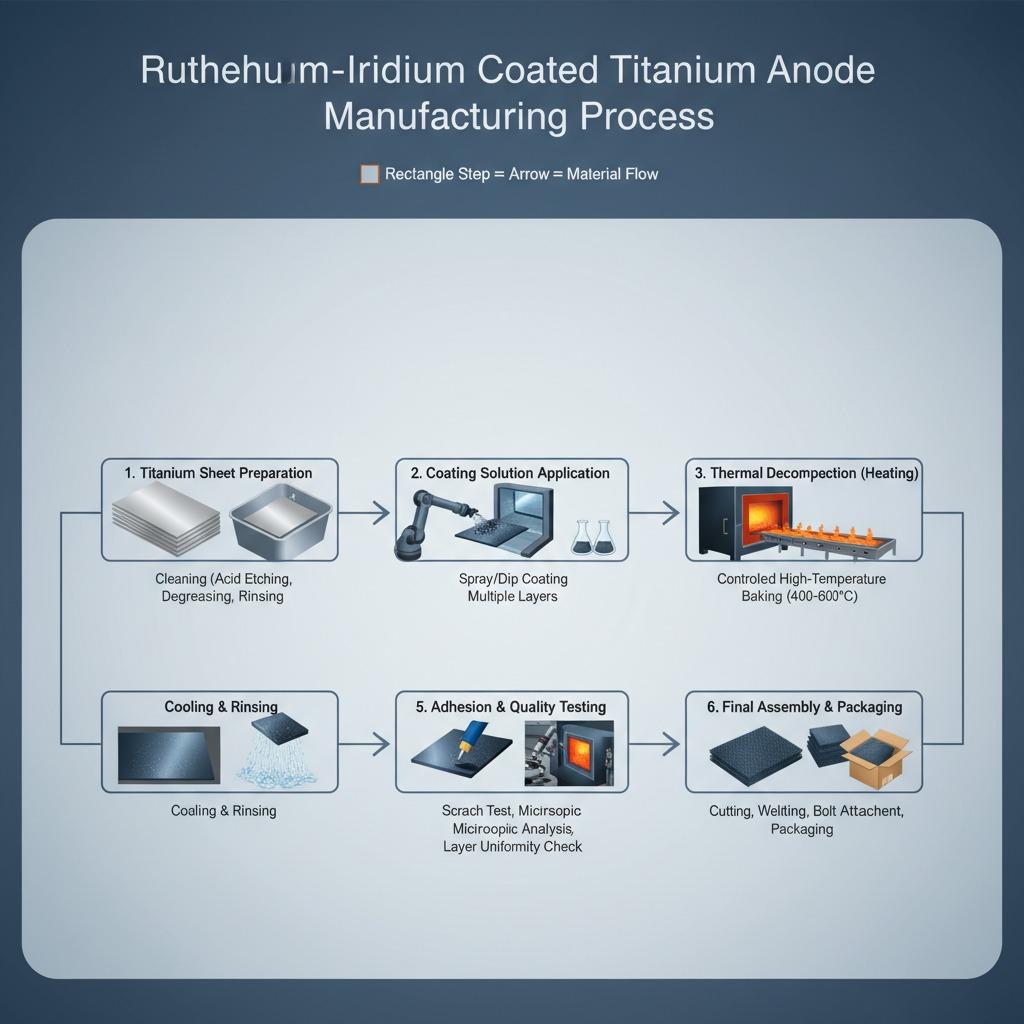
Begin with high-purity titanium sheets or meshes, cut to your desired dimensions using precision tools to avoid stress points. The next phase in titanium anode manufacturing involves surface preparation: clean the titanium with acid etching to remove oxides, followed by thermal spraying or electrodeposition of the ruthenium iridium layer. For iridium titanium anodes, control the ruthenium-to-iridium ratio—often 70:30—for balanced catalytic activity. Cure the coated anode at 400-500°C to bond the layers securely. Test for adhesion using a tape test or electrochemical cycling to confirm durability. Customization options include mesh designs for better electrolyte flow or solid plates for high-pressure setups. Always source from reputable suppliers to ensure compliance with ISO standards, preventing premature failure in your systems.
Installation and Maintenance Best Practices
Once manufactured, installing ruthenium iridium coated titanium anodes requires careful setup to optimize performance. Position them in the electrolytic cell with adequate spacing from cathodes—typically 5-10 mm—to minimize resistance. Secure connections with titanium bolts to avoid galvanic corrosion. During operation, monitor pH and temperature; these anodes perform best below 80°C in acidic or alkaline media. For maintenance, regularly inspect for coating wear by measuring cell voltage; a rise above 10% indicates recoating needs. Clean gently with deionized water and avoid abrasives to preserve the iridium titanium anodes’ integrity. Implementing a routine check every 500 hours can extend service life to over 5,000 hours, reducing downtime and costs.
Applications and Troubleshooting Common Issues
Ruthenium iridium coated titanium anodes shine in diverse applications, from wastewater treatment where they facilitate efficient pollutant oxidation to metal finishing for uniform plating. In titanium anode manufacturing hubs, they’re pivotal for scaling production without frequent replacements. If you encounter issues like uneven current distribution, adjust the anode-cathode gap or verify coating uniformity. For passivation problems, introduce periodic reverse polarity cleaning. By following these how-to steps, you can leverage the full potential of these advanced anodes, ensuring reliable, cost-effective electrochemical processes. Whether upgrading existing systems or designing new ones, prioritizing quality in ruthenium iridium coated titanium anodes will drive innovation and sustainability in your operations.