
 EN
EN  ZH
ZH  JA
JA  DE
DE 
Blog
The Power of Seawater Desalination with Titanium Anode
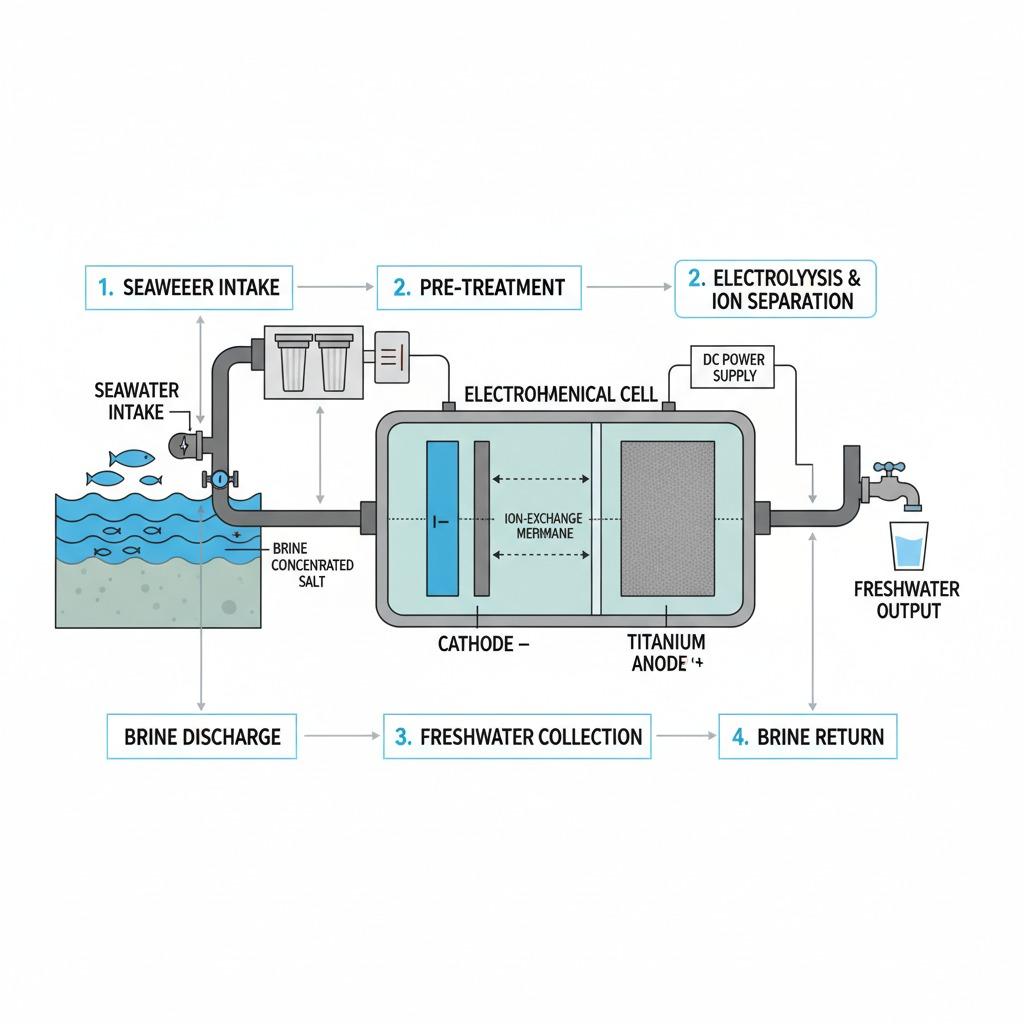
Unlocking the Future of Clean Water: The Power of Seawater Desalination with Titanium Anode Technology
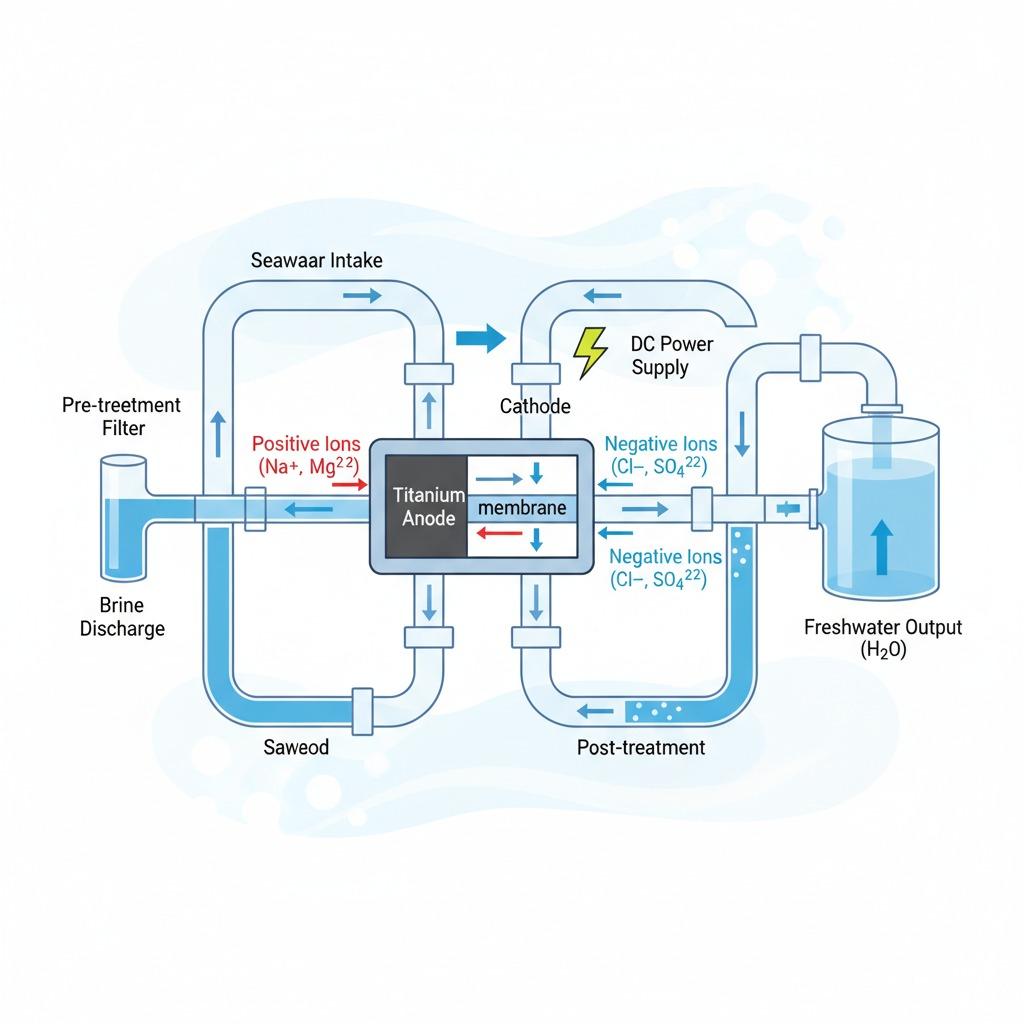
In an era where water scarcity threatens global communities, seawater desalination emerges as a transformative solution to provide abundant, pure water. This innovative process converts vast ocean resources into drinkable freshwater, addressing the needs of millions facing shortages. At the heart of efficient seawater desalination lies advanced technology like the titanium anode, which enhances electrochemical efficiency and durability in harsh marine environments. By leveraging such cutting-edge components, industries can scale up production to meet growing demands, ensuring sustainable hydration for urban centers and remote areas alike.
Why Titanium Anode is Essential in Seawater Desalination
The titanium anode stands out in seawater desalination for its exceptional corrosion resistance and longevity, making it ideal for the corrosive chloride-rich seawater. Traditional electrodes often degrade quickly in saline conditions, leading to high maintenance costs and downtime. In contrast, a titanium anode coated with specialized materials like iridium or ruthenium oxides maintains peak performance over extended periods, reducing operational expenses by up to 30%. This reliability is crucial in modular electrochemical cell setups, where stacked plates and fluid tubing facilitate continuous ion removal through electrolysis. Imagine a system where seawater flows through transparent tubes, undergoing precise electrochemical treatment to strip away salts— the titanium anode ensures this process runs smoothly, yielding high-purity output without compromising on energy efficiency. For businesses and municipalities investing in desalination, choosing titanium anode technology isn’t just practical; it’s a strategic move toward cost-effective, long-term water security.
Modular Electrochemical Cells: Revolutionizing Desalination Processes
Modular electrochemical cells represent the next evolution in seawater desalination, offering flexibility and scalability that traditional methods can’t match. These setups feature stacked conductive plates—often stainless steel or graphite—separated by insulating spacers and secured with bolts for optimal sealing. Integrated with titanium anodes, they enable efficient electrolysis, where an electric current drives the separation of water molecules and salt ions. Fluid circulation via attached tubing allows for continuous operation, treating large volumes of seawater in a compact footprint. This design is particularly persuasive for industries, as it supports applications beyond desalination, such as wastewater treatment and hydrogen production as byproducts. By adopting these modular systems, operators gain the ability to customize configurations for specific needs, whether for small-scale pilots or massive coastal plants. The result? Faster deployment, minimized environmental impact, and a compelling return on investment that positions seawater desalination as a viable, everyday reality.
Sustainable Advantages and Real-World Impact
Embracing seawater desalination powered by titanium anode technology delivers profound sustainability benefits, far outweighing conventional alternatives like reverse osmosis, which consume excessive energy. Electrochemical methods using titanium anodes operate at lower voltages, slashing electricity use while producing minimal waste—often generating valuable hydrogen gas as a bonus. In real-world scenarios, such as arid regions in the Middle East or drought-stricken California, these systems have successfully desalinated billions of gallons annually, supporting agriculture, industry, and households. The modular nature allows for easy upgrades and maintenance, ensuring adaptability to future challenges like climate change. Stakeholders convinced by the data will see that investing in titanium anode-equipped desalination isn’t merely an expense; it’s a gateway to resilient infrastructure and economic growth. As global water demands intensify, this technology persuades us to act now, turning the endless sea into a reliable lifeline for generations to come.
Steps to Implement Advanced Seawater Desalination Today
Getting started with seawater desalination using titanium anode systems is straightforward and rewarding. Begin by assessing your site’s salinity levels and throughput requirements, then select a modular electrochemical cell tailored to those parameters. Partnering with experts ensures proper integration of titanium anodes for maximum efficiency. Pilot testing on a blue-lab backdrop, as seen in prototype setups, validates performance before full-scale rollout. The persuasive case is clear: early adopters reap benefits like reduced costs and enhanced water quality, setting a benchmark for sustainability. Don’t wait for scarcity to strike—harness seawater desalination’s potential with titanium anode innovation to secure your water future.