
 DE
DE  EN
EN  ZH
ZH  JA
JA 
Der Blog
Industrielle Titananodenplatten: Worauf Käufer achten sollten
What Buyers Usually Mean by an Industrial Titanium Anode Plate
People often search for industrial titanium anode plate when they are really trying to solve a practical equipment problem: how to keep an industrial enclosure or process unit functioning safely without sacrificing airflow, protection, or service access. The term can be used in different ways across industries, and that is exactly why buyers should slow down before placing an RFQ. A plate that looks right in a photo may still fail on material compatibility, mounting, or the real job it has to do.
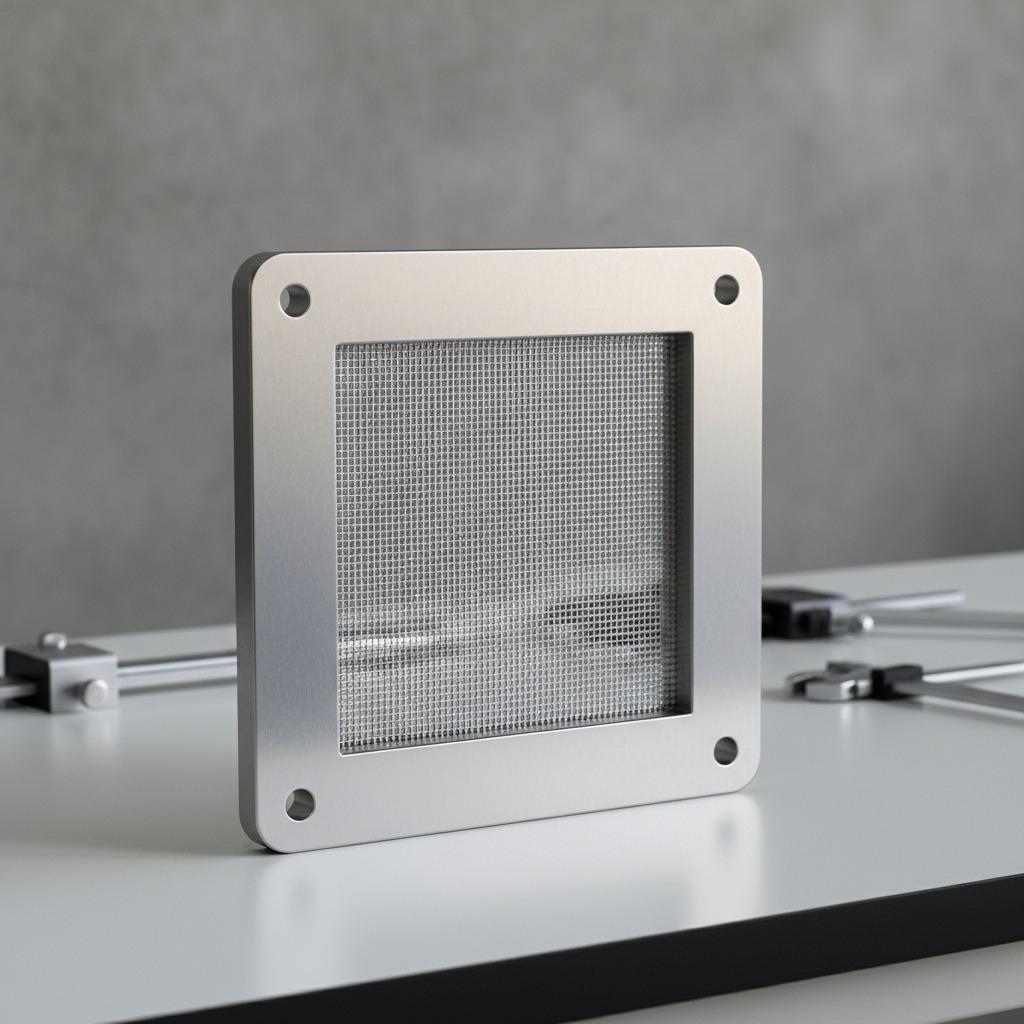
In many production settings, the part in question resembles a vented plate or grille assembly rather than a pure structural panel. Based on the product details provided, it has a rectangular metal frame with rounded corners, multiple evenly spaced mounting holes, and a central insert filled with fine mesh. That kind of geometry is common in ventilation covers, protective screens, and some acoustic or EMI-related panels. The key decision is not just “does it fit?” but “does it fit, fasten, and perform the way the equipment needs?”
Quick Takeaways for Engineers and Sourcing Teams
If you are comparing this type of part, start with the basics: frame material, insert material, mounting pattern, and the role of the mesh. The outer plate appears to be a light-colored coated or plated sheet metal part, while the insert looks like dark metal mesh, possibly steel or stainless steel. That combination suggests a component made for serviceable equipment, not decorative use.
It is also worth noting the visible assembly approach. Separate insert pieces with L-shaped profiles suggest the screen may be layered, folded, crimped, welded, or clamped into the frame. That detail matters more than it seems. A neat-looking assembly can still be troublesome if the insert loosens under vibration or the edge treatment creates sharp points during maintenance.
Why the Right Plate Design Matters
In industrial equipment, a vented plate or protective grille is doing more than covering an opening. It can affect temperature management, operator safety, contamination control, and access for cleaning or replacement. If airflow is too restricted, the enclosure runs hotter than intended. If the mesh is too open, the assembly may not offer enough protection from debris, fingers, or incidental contact. If the mounting layout is awkward, service time goes up and installers tend to improvise, which is usually where future failures begin.
That is why buyers should treat this as a component-selection decision, not a commodity purchase. A small mismatch in hole spacing or frame depth can force extra machining, field drilling, or a replacement order. None of those are cheap once a line is already waiting.
Common Manufacturing Routes for This Kind of Part
Frame fabrication
The rectangular plate is typically made through sheet metal stamping, laser cutting, punching, or a combination of those processes. Rounded corners and perimeter holes are straightforward features, but they need consistent location control if the part has to mount cleanly across repeated builds.
Mesh insert production
The central insert may be expanded metal, perforated sheet, or a finer mesh structure. In practice, the performance depends on how tightly the insert is supported at the edges and whether the open area is balanced against stiffness. A flimsy insert can rattle, and a overbuilt one can block too much air.
Assembly and finishing
Assembly methods vary. Welding gives a rigid result but can affect finish quality around the joint. Crimping or clamping can make replacement easier. Bonding may be suitable in some low-stress applications, though buyers should ask how the assembly behaves under heat, vibration, and repeated cleaning. The visible matte to semi-matte finish suggests function comes before appearance, which is usually the right priority for industrial hardware.
How to Select the Right Version
For sourcing managers, the shortest useful checklist is this: confirm the mounting hole pattern, check the required opening size, define the acceptable material family, and clarify whether the part must resist corrosion, heat, or electrical interference. Do not assume the same-looking plate can serve across multiple equipment platforms. A grille used as an air intake is not always interchangeable with one used as an exhaust cover or internal shield.
If the application involves moisture, chemicals, or frequent washdown, the metal choice becomes even more important. Titanium is attractive in aggressive environments because of its strength-to-weight and corrosion-resistance reputation, but buyers should only specify it when the application truly calls for it. For many enclosure and airflow uses, aluminum, steel, or stainless steel may be more practical and easier to source. The right answer depends on the duty cycle, not the name.
Practical Buyer Warnings
One common mistake is over-focusing on mesh appearance and under-specifying the frame. The frame carries the load, sets the fit, and survives handling. Another is ignoring edge treatment. A rounded corner is a small detail, but it can improve safety during installation and reduce damage in transit. Also, if the panel is meant to be removable, ask how often the fasteners will be accessed and whether the holes are sized for standard hardware or a proprietary setup.
For custom parts, ask for drawings that show the hole pattern, overall dimensions, edge profile, and assembly method. A photo is helpful, but it is not a manufacturing specification.
FAQ: Short Answers Buyers Usually Need
Is this always a titanium part?
Not necessarily. The search term may point to a titanium application, but the provided product details describe a plated or coated sheet metal frame with a dark metal mesh insert. The actual alloy is not verifiable from the image alone.
Can this be used for ventilation?
Yes, that is one likely use case. It could also serve as a protective screen or a cover for an opening where airflow and shielding both matter.
What should I verify first?
Hole spacing, overall size, material requirements, and whether the mesh needs to prioritize airflow, protection, or shielding.
Next Step for RFQ or Redesign Work
If you are sourcing an industrial titanium anode plate or a similar vented plate assembly, the best next step is to define the function before the finish. Share the application, the mounting layout, the environment, and any non-negotiable material limits. That gives the manufacturer a real starting point and keeps you from buying a part that looks right but behaves badly once it is inside the machine.