
 DE
DE  EN
EN  ZH
ZH  JA
JA 
Der Blog
Titananodenherstellung: 7 praktische Punkte, die Käufer beachten sollten
Titananodenherstellung: 7 praktische Punkte, die Käufer vor der Spezifizierung eines Bauteils prüfen sollten
Die Herstellung von Titananoden ist eines dieser Themen, die zunächst komplex erscheinen, bis man für die Anlagenverfügbarkeit, die chemische Beständigkeit oder die Elektrolytleistung verantwortlich ist. Dann wird die Materialbeschaffung schnell zum Problem. Die Anode selbst mag wie ein einfacher Korb, Käfig oder geformter Einsatz aussehen, doch die Details des Metalls, das Perforationsmuster und das Formgebungsverfahren können das Verhalten des Bauteils im Betrieb maßgeblich beeinflussen.
Für Ingenieure und Produktteams lautet die Entscheidung selten einfach nur „Ist es realisierbar?“. Vielmehr geht es um Fragen wie „Wird es formstabil sein, den Durchfluss ermöglichen, den Prozessbedingungen standhalten und sich praktikabel installieren und reinigen lassen?“ Genau hier zahlt sich eine sorgfältige Prüfung der Titananodenfertigung aus. Eine fehlerhafte Konstruktion kann zu schlechter Stromverteilung, Verstopfungen, schwachen Verbindungen oder vermeidbarem Wartungsaufwand führen. Die richtige Konstruktion hingegen ist in der Regel unauffällig – und das im besten Sinne: Sie erfüllt ihren Zweck, bleibt stabil und wird schnell vergessen.
1. Beginnen Sie mit der Serviceumgebung, nicht mit der Zeichnung.
Bevor man über Blechdicke oder Nahtgestaltung spricht, muss man die Belastungen definieren, denen das Bauteil ausgesetzt sein wird. In elektrochemischen oder verfahrenstechnischen Umgebungen können diese Hitze, Feuchtigkeit, Salze, Säuren, Laugen oder wiederholte Reinigung umfassen. Titan wird oft aufgrund seiner Korrosionsbeständigkeit in anspruchsvollen Anwendungen gewählt, doch ist nicht jede gefertigte Form automatisch geeignet.
Ein Käufer sollte sich eine einfache Frage stellen: Handelt es sich um ein Strukturbauteil, ein Durchflussbauteil oder ein Behälterbauteil? Ein zylindrischer, perforierter Korb mit Laschen deutet beispielsweise darauf hin, dass neben der elektrischen oder verfahrenstechnischen Leistung auch Anforderungen an Handhabung und Fixierung wichtig sind. Soll das Bauteil Medien oder Teile aufnehmen, sind Öffnungsmuster und Steifigkeit entscheidend. Ist es Teil einer Anodenbaugruppe, können Geometrie und Oberflächenbeschaffenheit wichtiger sein als das Aussehen.
2. Den grundlegenden Herstellungsprozess verstehen
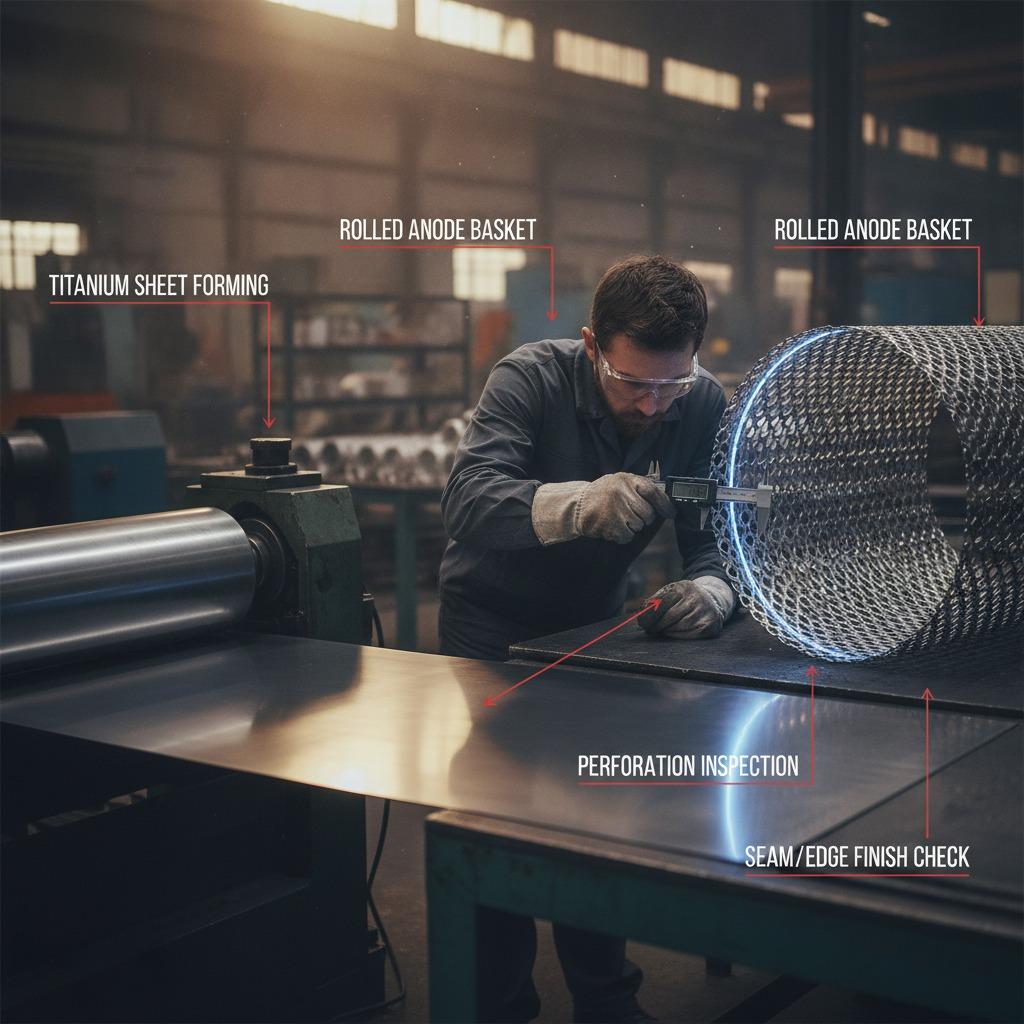
Die Herstellung von Titananoden erfolgt typischerweise durch eine Kombination aus Blechumformung, Perforation oder Streckmetallerzeugung, Walzen und Fügen. Dies ist das praktikable Verfahren, wenn die Endform ein Zylinder oder eine ähnliche offene Form ist. In manchen Fällen ist die Schweißnahtqualität an den Verbindungsstellen der entscheidende Faktor, der über die Lebensdauer des Bauteils bei wiederholter Beanspruchung entscheidet.
Dennoch sollten Käufer vorsichtig sein, nicht anzunehmen, dass ein optisch einfaches Bauteil leicht herzustellen ist. Titan verhält sich bei der Bearbeitung anders als Baustahl. Werkzeuge, Umformschritte und Oberflächenbehandlung erfordern besondere Aufmerksamkeit. Falls das Bauteil Laschen, Halterungen oder Befestigungspunkte aufweist, sollten diese Merkmale nicht nur auf ihre Position, sondern auch auf Steifigkeit und Befestigungssicherheit geprüft werden.
3. Vergleichen Sie die Merkmale, die die Funktion beeinflussen.
Perforations- oder Maschenmuster
Die offene Struktur ermöglicht je nach Anwendungsfall Entwässerung, Durchfluss, Belüftung oder Stromfluss. Das genaue Muster ist oft genauso wichtig wie das Grundmaterial.
Geformte Zylindergeometrie
Eine hohe, oben offene zylindrische Form kann beim Einbringen und Umschließen hilfreich sein, allerdings sollte die Beschaffenheit der Nähte und Wände auf Verformungen überprüft werden.
Laschen oder Griffe oben
Diese kleinen Verlängerungen werden leicht übersehen. In der Praxis erleichtern sie das Anheben, Ausrichten, Einsetzen und Montieren. Sie können aber auch zu Belastungspunkten führen, wenn die Konstruktion unterdimensioniert ist.
4. Spezifizieren Sie nicht zu detailliert, was der Prozess nicht benötigt.
Ein häufiger Fehler bei der Herstellung von Titananoden ist die Überfrachtung des Designs mit unnötigen Anforderungen. Nicht jeder Korb benötigt eine extrem hohe Wandstärke. Nicht jeder perforierte Abschnitt benötigt die gleiche offene Fläche. Übermäßige Spezifikationen können die Formgebung, die Inspektion und die Beschaffung des Bauteils erschweren, ohne die Leistung zu verbessern.
Andererseits birgt eine zu geringe Spezifikation genauso viele Risiken. Wird das Bauteil häufig gehandhabt, kann eine empfindliche Wandstärke oder eine schlecht befestigte Lasche frühzeitig versagen. Wird es einem Nassprozess ausgesetzt, kann eine Oberfläche, die im Betrieb akzeptabel aussieht, später dennoch Wartungsprobleme verursachen. Hier ist praktisches Urteilsvermögen wichtiger als die Angaben im Katalog.
5. Fragen Sie den Lieferanten nach der Verbindungs- und Kantenqualität.
Bei gefertigten Titanteilen ist die Naht ein entscheidender Faktor. Ein gewalzter Zylinder kann aus der Ferne einwandfrei aussehen, obwohl die Verbindung schwach oder uneben ist. Dasselbe gilt für alle angebrachten Laschen, Halterungen oder Verstärkungspunkte. Auch die Kantenbeschaffenheit ist wichtig, da scharfe Kanten die Handhabung erschweren und unnötige Verschleißstellen bei der Montage verursachen können.
Ist der Lieferant erfahren, sollte er den wahrscheinlichen Prozessablauf erläutern und aufzeigen können, wo die Toleranzen am kritischsten sind. Kann er das nicht, sind auch diese Informationen hilfreich.
6. Nutze die sichtbare Form als Hinweis, nicht als Schlussfolgerung.
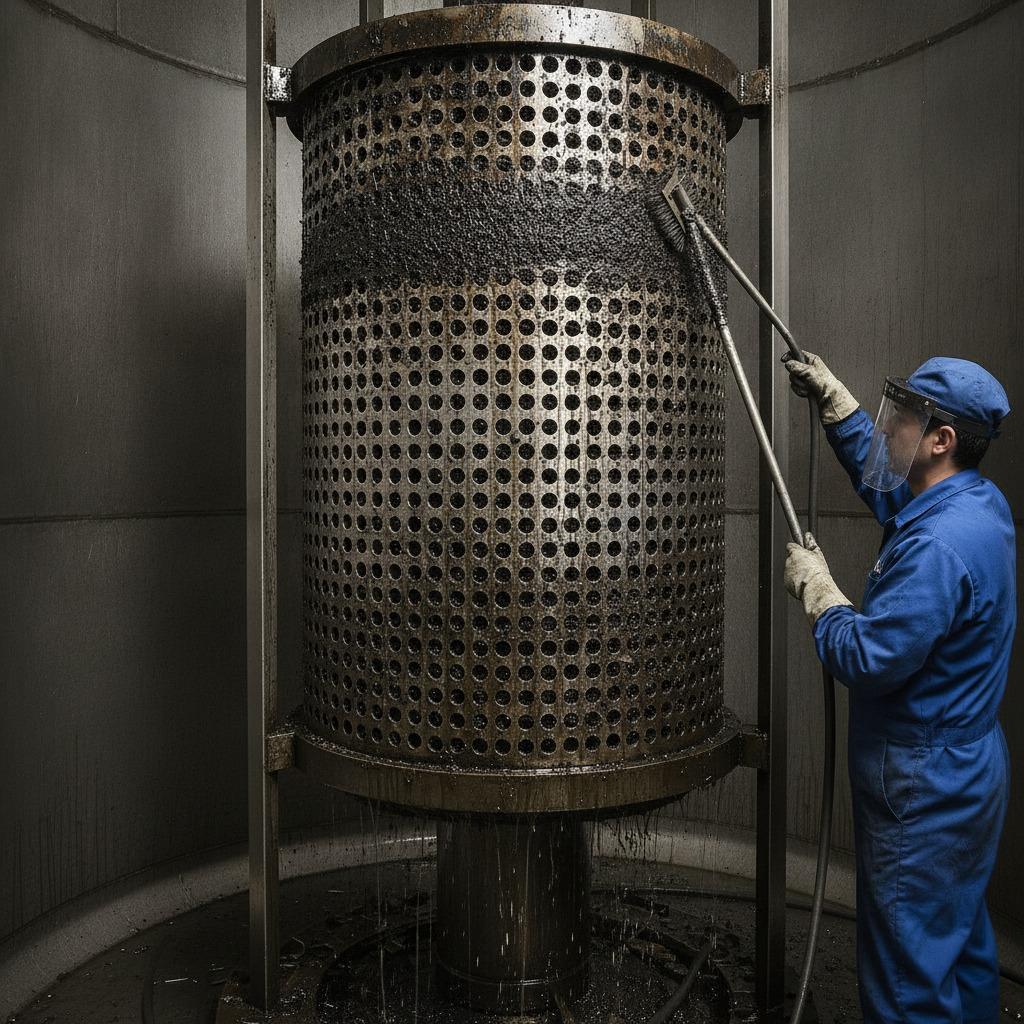
Ein schwarzer, zylindrischer Metallkorb mit Perforationen und zwei Laschen an der Oberseite lässt auf Filtrations-, Trenn- oder Schutzfunktionen schließen. Er kann auch Teil einer Prozessanlage sein, in der Luftzirkulation oder Entwässerung erforderlich sind. Die sichtbare Form allein gibt jedoch nicht alle Informationen preis. Käufer sollten daher nicht allein aufgrund des Aussehens auf den Verwendungszweck schließen, sondern zunächst die Betriebsbedingungen definieren.
Diese Vorsicht ist umso wichtiger, wenn man die Herstellung von Titananoden mit anderen Metallbearbeitungsprojekten vergleicht. Ein Bauteil, das auf der Werkbank ähnlich aussieht, kann im Betrieb völlig andere Füge-, Reinigungs- oder Prüfverfahren erfordern.
7. Eine kurze Checkliste für Käufer vor der Angebotsanfrage
- Definieren Sie die Umgebungsbedingungen, denen das Bauteil ausgesetzt sein wird.
- Prüfen Sie, ob es sich bei dem Bauteil um ein Strukturbauteil, ein Durchflussbauteil oder ein Bauteil mit Fokus auf die Behälterhaltung handelt.
- Geben Sie das Öffnungsmuster nur so genau an, wie es die Funktion erfordert.
- Erwartungen an die Naht- und Laschenbefestigung prüfen.
- Erkundigen Sie sich, wie der Lieferant das Formen, Verbinden und Kantenbearbeiten handhabt.
- Prüfen Sie, ob die Konstruktion einen einfachen Zugang zur Reinigung oder eine einfache Demontage erfordert.
So sieht gute Beschaffung aus
Die beste Kaufentscheidung ist selten das auf dem Papier günstigste Bauteil. Es ist das Bauteil, das zum Prozess passt, problemlos herstellbar ist und keine versteckten Wartungskosten verursacht. Bei der Herstellung von Titananoden bedeutet das, von den Betriebsbedingungen auszugehen und Geometrie, Verbindungs- und Handhabungsdetails vor Produktionsbeginn mit dem Lieferanten abzustimmen.
Wenn Sie eine Angebotsanfrage vorbereiten, senden Sie bitte die Betriebsumgebung, die Zeichnung, die erwartete Belastung bzw. das Handhabungsverfahren sowie alle zwingend erforderlichen Oberflächen- oder Durchflussanforderungen. Befindet sich die Anwendung noch in der Entwicklung, fordern Sie zunächst eine Fertigungsprüfung an. Dieser zusätzliche Schritt spart oft einen späteren Überarbeitungszyklus, der üblicherweise für Terminprobleme sorgt.
Häufig gestellte Fragen
Ist Titan immer die richtige Wahl für ein anodenbezogenes Bauteil?
Nicht immer. Titan wird oft aufgrund seiner Korrosionsbeständigkeit und Prozessbeständigkeit ausgewählt, die endgültige Wahl hängt jedoch von den chemischen, temperaturbezogenen und mechanischen Anforderungen ab.
Warum sind Laschen oder Griffe so wichtig?
Weil sie die Montage, Demontage und Spannungskonzentration beeinflussen. Ein kleines Bauteil kann zu einer Schwachstelle werden, wenn es nicht sorgfältig konstruiert und angebracht wird.
Welche Fragen sollten Käufer als Erstes stellen?
Fragen Sie nach dem Verwendungszweck des Bauteils und anschließend nach dessen Herstellung. Diese beiden Antworten offenbaren in der Regel die größten Risiken.
Wenn Sie jetzt ein Projekt zur Herstellung von Titananoden evaluieren, ist der nächste Schritt unkompliziert: Dokumentieren Sie die Einsatzbedingungen, legen Sie fest, welche mechanischen Eigenschaften das Bauteil haben muss, und bitten Sie den Lieferanten, Ihnen vor der Angebotserstellung das Formgebungs- und Fügeverfahren zu erläutern.