
 EN
EN  ZH
ZH  JA
JA  DE
DE 
Blog
Titanium Anode Replacement: What to Check Before You Order
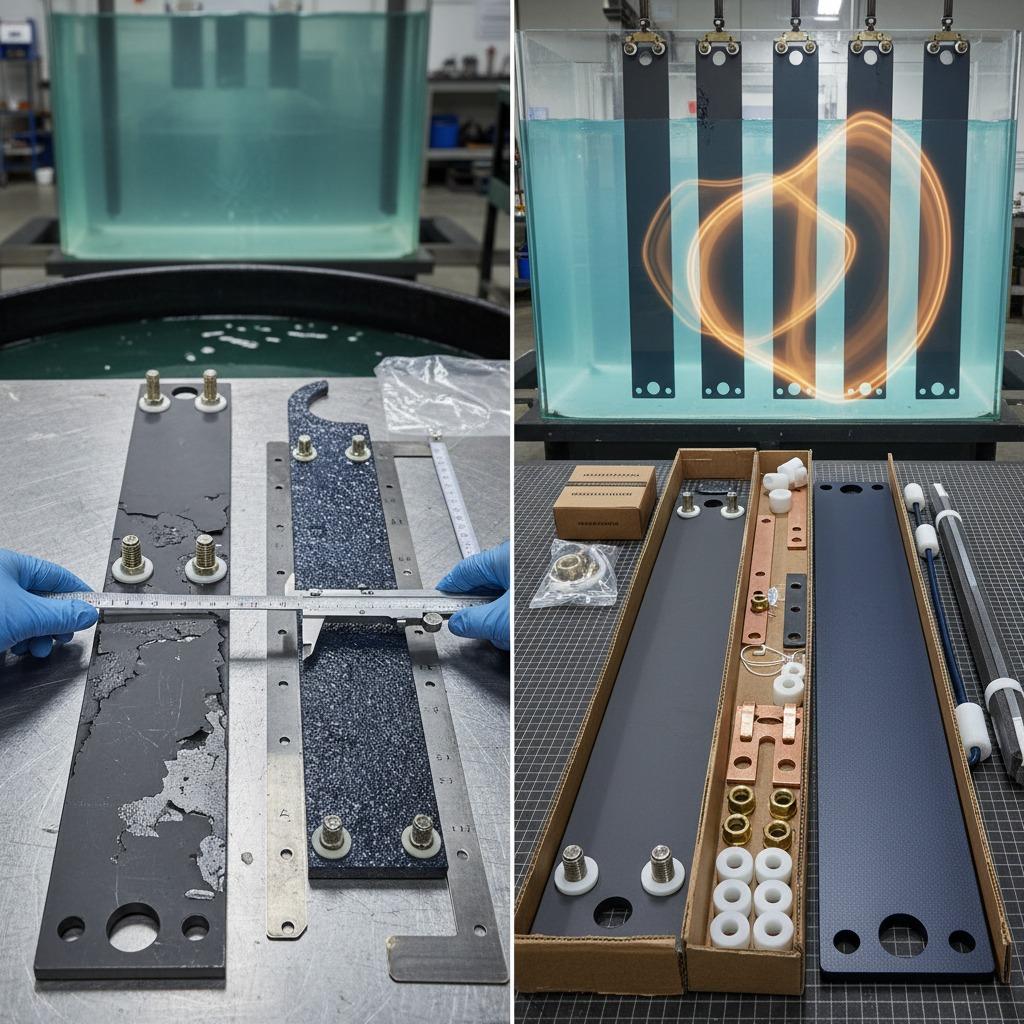
Why titanium anode replacement deserves a careful plan
Titanium anode replacement is one of those maintenance jobs that looks straightforward until the equipment starts underperforming a few weeks later. On paper, you are swapping a worn electrode for a new one. In practice, you are protecting current distribution, bath chemistry, product quality, and uptime all at once. A replacement that is even slightly off in geometry, connection method, or coating condition can shift the load to neighboring parts and create new problems.
That is especially true in electrochemical and plating systems where the anode is not just a piece of metal, but part of a controlled electrical path. If the original assembly used long narrow bars or plates, with evenly spaced fasteners and terminal studs at the end, the replacement should respect that layout. The exact hardware may vary, but the logic is the same: match the functional shape, check the connection points, and confirm the surface condition before power goes back on.
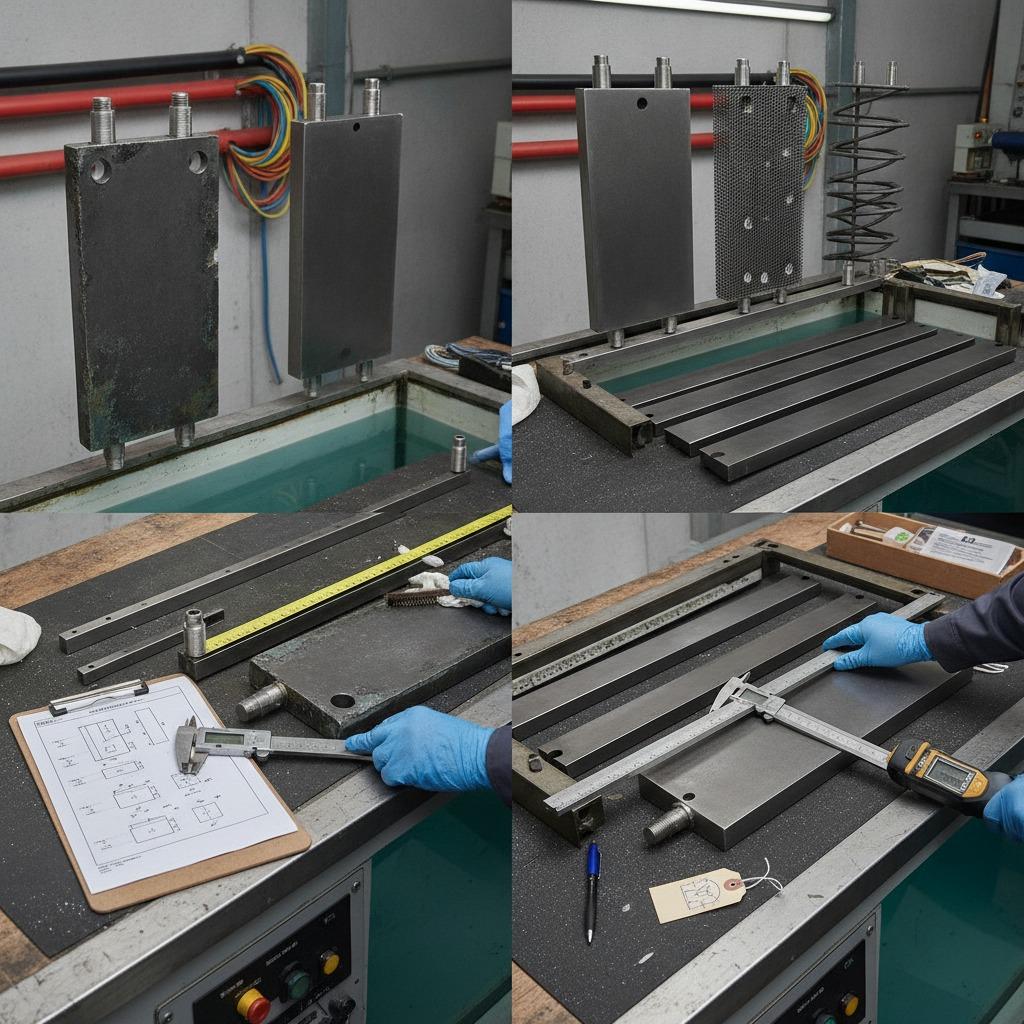
What the replacement decision is really about
Most buyers do not need a theoretical discussion. They need to decide whether to replace the anode as a like-for-like component, repair the assembly, or redesign the set for better service life. The answer depends on how the old part failed.
If the anode coating is visibly worn, blistered, or uneven, a simple swap may be enough. If the failure came from poor contact, corrosion at the terminals, warped supports, or repeated mechanical damage, then replacement should include the surrounding hardware. This is where practical caution matters: changing only the anode body while leaving suspect connectors in place often shortens the life of the new part.
Quick checks before you order
1. Identify the anode type and duty
Start by confirming whether the system uses a coated titanium anode, a dimensionally stable anode, or another specialized electrode form. The safe approach is to match the existing application, not just the visible shape. A replacement for a plating line is not chosen the same way as one for water treatment or cathodic protection, even if both use titanium-based hardware.
2. Measure what actually matters
Do not rely on a nameplate alone if the old part is still in service. Check overall length, mounting pattern, terminal spacing, and the position of any cutouts or insulated standoffs. In some assemblies, the important detail is the end geometry: for example, a U-shaped cutout that leaves two threaded connections accessible. That kind of detail can save a shift during installation, or it can create a headache if it is ignored.
3. Inspect the contact points
The interface between the anode and the bus or power connection deserves more attention than many teams give it. Threaded studs, nuts, terminal blocks, and clamping surfaces should be clean and mechanically sound. If the assembly uses white insulating spacers or caps, make sure they are intact and positioned correctly. A replacement part can look perfect and still fail early if the electrical connection is loose or contaminated.
Common mistakes that shorten service life
One common mistake is assuming all titanium anodes are interchangeable because they share the same base material. They are not. The coating system, surface area, and geometry drive performance. Another mistake is overlooking balance across a bank of electrodes. If one bar or plate is replaced with a slightly different profile, current density can drift, and the system may age unevenly.
Buyers also sometimes focus on the visible metal and ignore the fabrication details. A replacement may arrive as a set of long rigid bars or plates with a matte coated surface, exposed studs, and evenly spaced fasteners along the centerline. That kind of build can be perfectly suitable, but it still needs a close look for coating consistency, straightness, and secure terminal hardware. If the part appears custom-made, which is common in industrial equipment, do not assume the last order can be repeated blindly without confirming the drawing or sample.
How to install without creating a new failure point
Before installation, isolate power, verify the circuit is safe, and document the old connection orientation. Clean the contact area rather than forcing new hardware onto oxidized or bent surfaces. Tighten fasteners evenly, especially on assemblies that rely on multiple studs or clamping points, so the load does not concentrate on one end.
After the swap, check alignment before the system is returned to full duty. A slightly shifted anode can change how solution or current flows across the work area. If the equipment uses several bars in slightly different finishes or shades, confirm they are installed in the intended positions rather than mixed by convenience. It sounds minor. It is not.
What buyers should ask suppliers
Ask for the exact anode geometry, the coating family, the connection style, and any recommended installation orientation. If the supplier offers a fabricated assembly, ask whether the terminal hardware is included and whether the insulating pieces are part of the kit or handled separately. For custom parts, request drawings or at least a dimensional reference before approving production. That small step prevents a lot of rework.
A practical buying rule
If the replacement is for a critical line, buy with the system in mind, not just the part in hand. The best titanium anode replacement is the one that restores performance without forcing last-minute adjustments in the field. Match the electrical path, preserve the mounting geometry, and do not let the visible part distract you from the connection details hidden at the ends.
Next step for maintenance teams
Before you place the order, build a short checklist: old part dimensions, terminal arrangement, mounting style, observed failure mode, and any nearby hardware that may need replacement too. With that information, sourcing becomes faster and the installation is less likely to surprise you. For most teams, that is the difference between a routine maintenance stop and an avoidable shutdown.